Disclaimer: this template is a starting point only. You are responsible for assessing the risks of your own work, and for making sure any document you produce from it is suitable and sufficient for the task, the site and the people involved. It is not health and safety advice.
Applying for CHAS or another SSIP scheme? A written policy is one of the first things assessors check. See what CHAS accreditation needs.
What's in the template
- Statement of general policy — your commitment to health and safety, ready to sign
- Organisation — who is responsible for what
- Arrangements — how you manage risk assessment, training, equipment, first aid, accidents, fire, welfare and more
- Review record
- Employee acknowledgement sheet
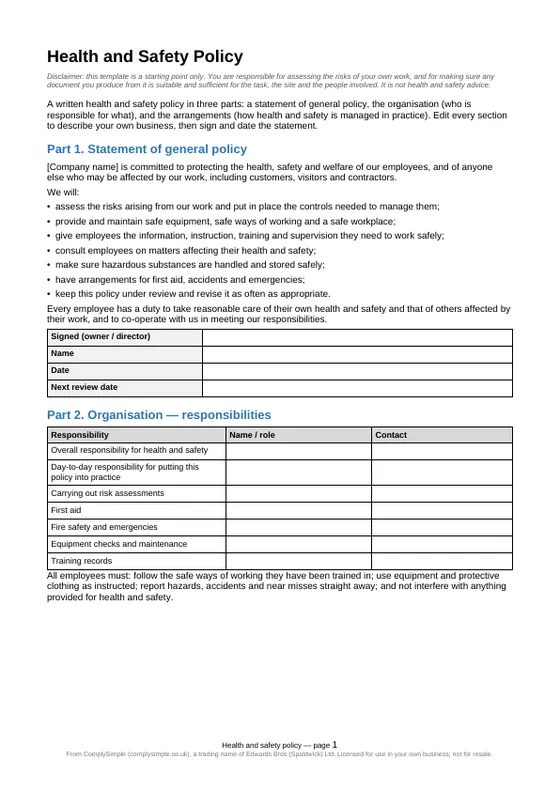
Sample: the statement of general policy
This is the opening of Part 1 exactly as it appears in the template. You replace the company name, edit the commitments to fit your business, and sign it.
[Company name] is committed to protecting the health, safety and welfare of our employees, and of anyone else who may be affected by our work, including customers, visitors and contractors.
We will:
- assess the risks arising from our work and put in place the controls needed to manage them;
- provide and maintain safe equipment, safe ways of working and a safe workplace;
- give employees the information, instruction, training and supervision they need to work safely;
- consult employees on matters affecting their health and safety;
- make sure hazardous substances are handled and stored safely;
- have arrangements for first aid, accidents and emergencies;
- keep this policy under review and revise it as often as appropriate.
Every employee has a duty to take reasonable care of their own health and safety and that of others affected by their work, and to co-operate with us in meeting our responsibilities.
Part 2 then sets out who is responsible for what, and Part 3 covers the arrangements: risk assessment, training, equipment, first aid, accidents, fire, welfare and the rest.
Do you need a written policy?
Section 2(3) of the Health and Safety at Work etc Act 1974 requires employers to prepare a written statement of their general policy on health and safety, and the organisation and arrangements for carrying it out — unless they employ fewer than five people. The policy must be brought to the attention of employees and revised as often as appropriate. There is no fixed review period, but review it whenever your business, people or risks change.
The three parts
| Part | What it says |
|---|---|
| Statement of general policy | Your aims and commitment, signed by the person in charge |
| Organisation | Who has overall and day-to-day responsibility, and who does specific jobs like first aid and risk assessment |
| Arrangements | The practical detail of how health and safety is managed in your workplace |
Making it work
- Write it about your business — a copied policy that doesn't match what really happens is worse than useless.
- Put real names against responsibilities.
- Show it to every employee and keep a signed record that they've seen it.
- Link it to your risk assessments — the arrangements section should say how they're done and reviewed.
Questions people ask
How do I write a health and safety policy?
Write it in the three parts above. Start with a short statement of intent signed by the person in charge, list who is responsible for each area by name or role, then describe how each area is managed in practice in your workplace. Keep it specific to your business, show it to your staff, and record that they have read it.
Can anyone write a health and safety policy?
Yes. There is no qualification needed. For most small businesses the owner or a manager writes it, because they know how the business really works. Responsibility for it stays with the employer whoever writes it, so the person in charge should sign it.
What should a health and safety policy include?
The statement of general policy, the organisation of responsibilities, and the arrangements. The arrangements usually cover risk assessment, consulting staff, training, safe equipment, hazardous substances, first aid, accident reporting, fire and emergencies, welfare, and how the policy is monitored and reviewed.
How often should it be reviewed?
The law says "as often as may be appropriate". In practice, review it when your business, people or work change, after a serious incident, and at a regular interval you choose. Many small businesses review it once a year and record the date.
More templates
 Free download
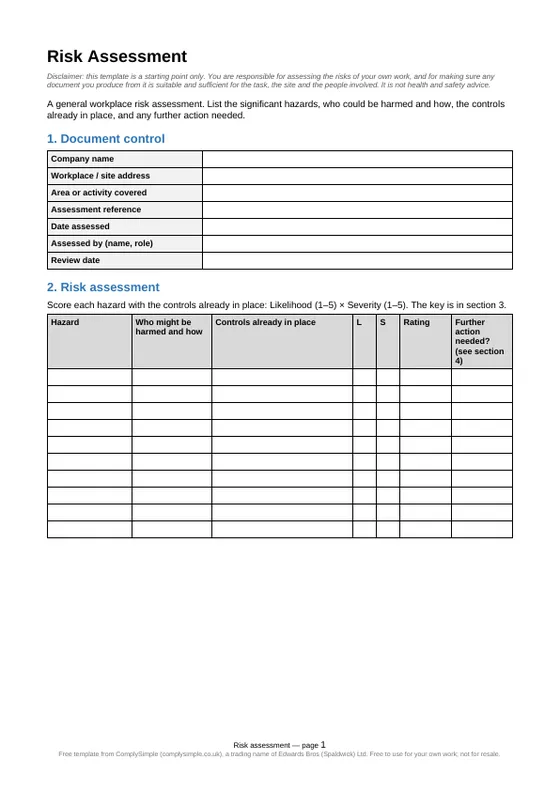
Risk assessment template
General workplace risk assessment for any small business — hazards, controls, risk rating and action plan.
 Free download
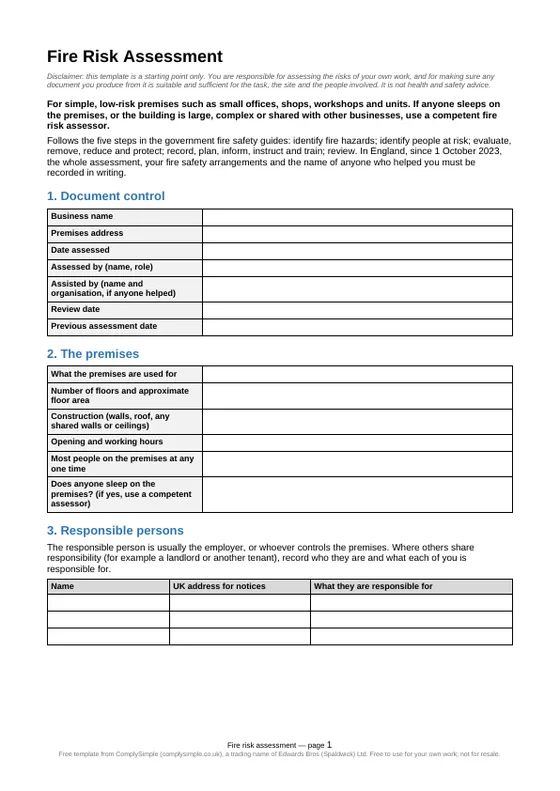
Fire risk assessment template
The five government steps, fire safety arrangements and the written record required since October 2023.
 Free download
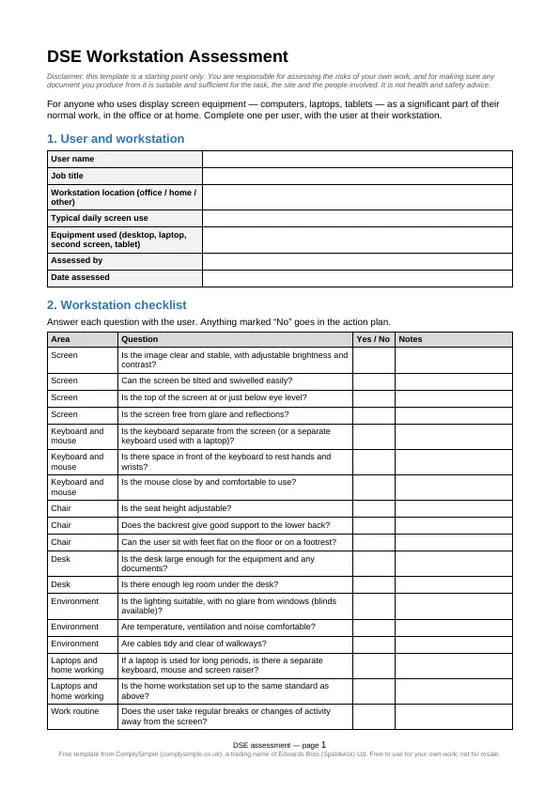
DSE assessment template
Workstation checklist for computer and laptop users, in the office or at home.
 Free download
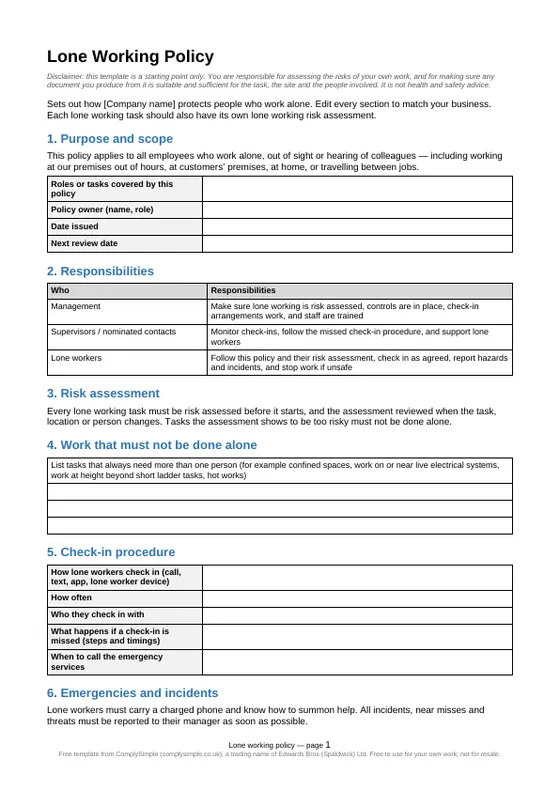
Lone working policy template
The rules for everyone who works alone — responsibilities, check-ins and emergencies.
 Free download
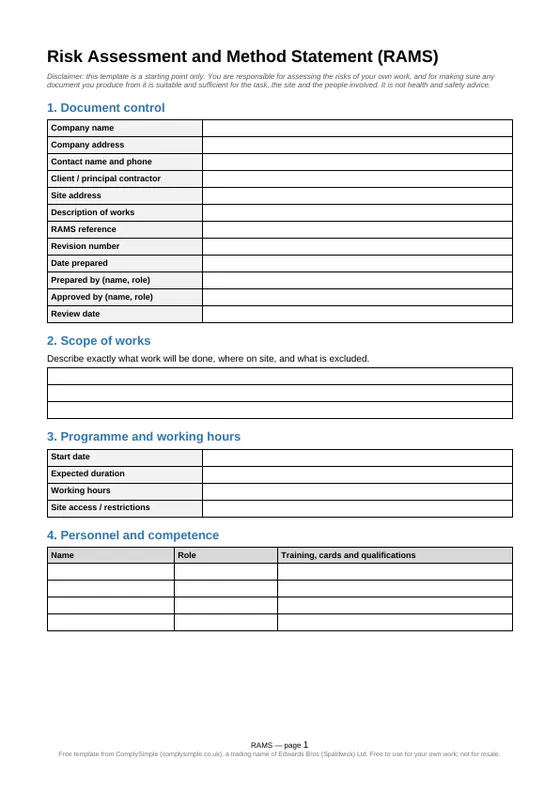
RAMS template
Risk assessment and method statement combined — what most principal contractors ask for.
 £9 Word template
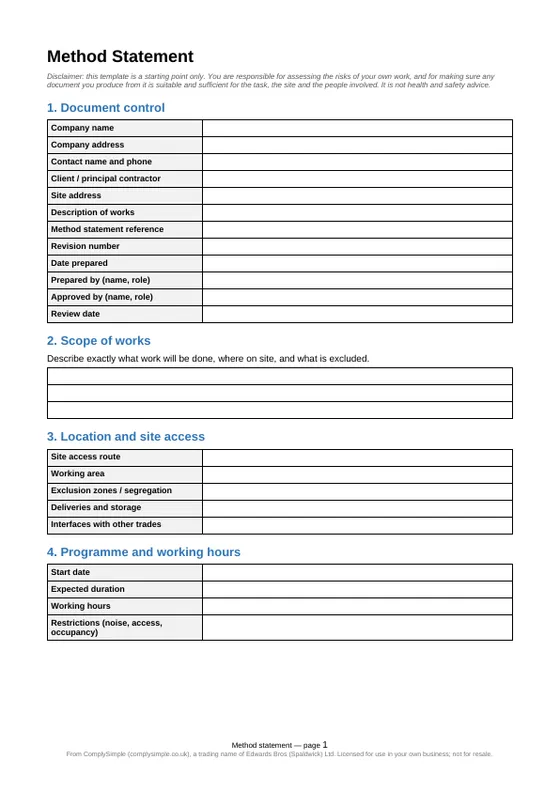
Method statement template
Step-by-step sequence of works, roles, plant, PPE and emergency arrangements.
 Free download
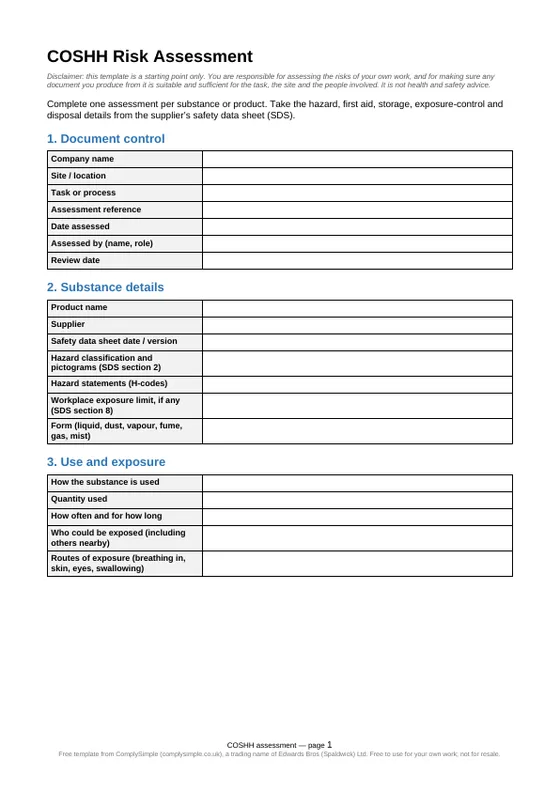
COSHH risk assessment template
For hazardous substances — safety data sheet details, controls, storage, spills and first aid.
 Free download
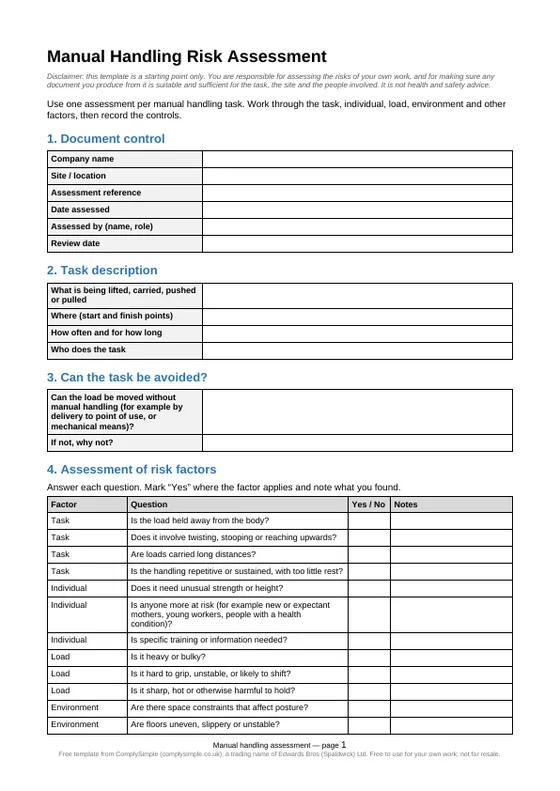
Manual handling risk assessment template
Lifting, carrying, pushing and pulling — task, load and environment factors, with controls.
 Free download
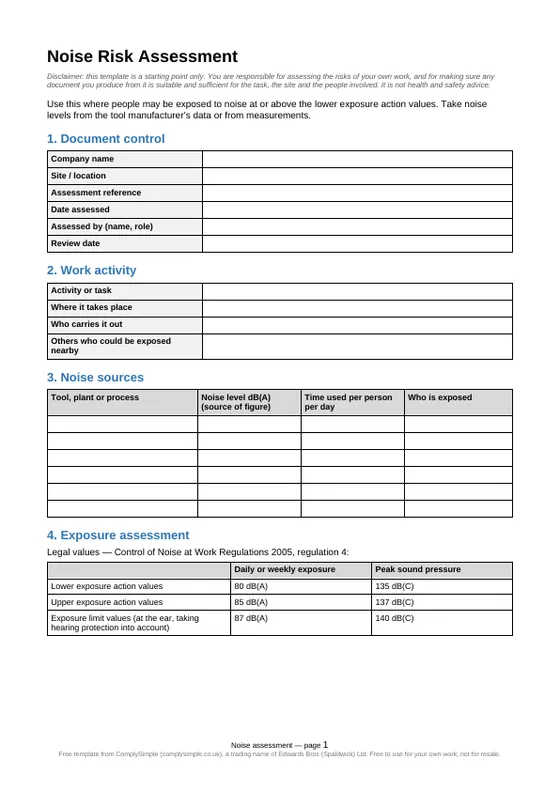
Noise risk assessment template
Noise sources and exposure against the legal action values, controls and hearing protection.
 Free download
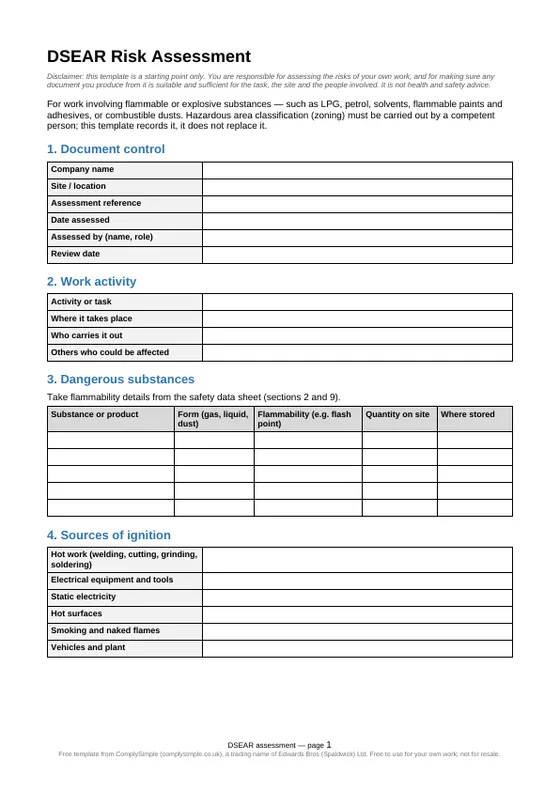
DSEAR risk assessment template
Flammable substances and ignition sources — controls, storage and emergency arrangements.
 Free download
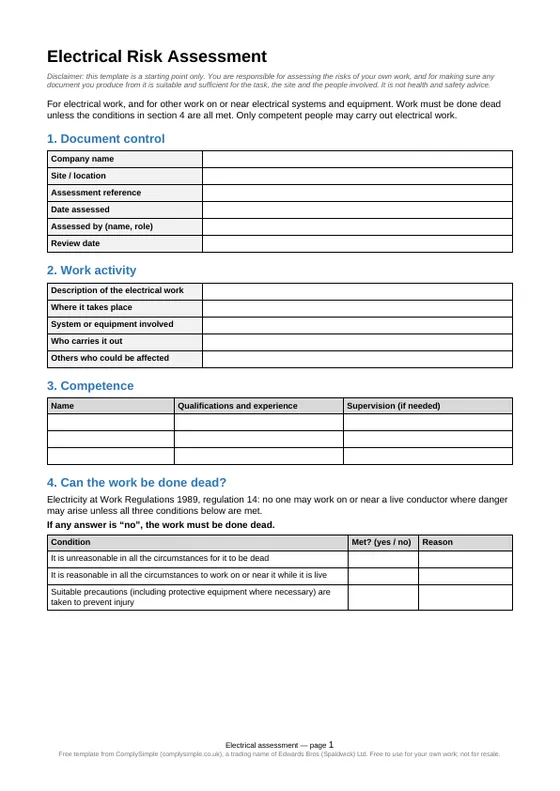
Electrical risk assessment template
Dead-working check, safe isolation steps, competence and controls for work on or near electricity.
 Free download
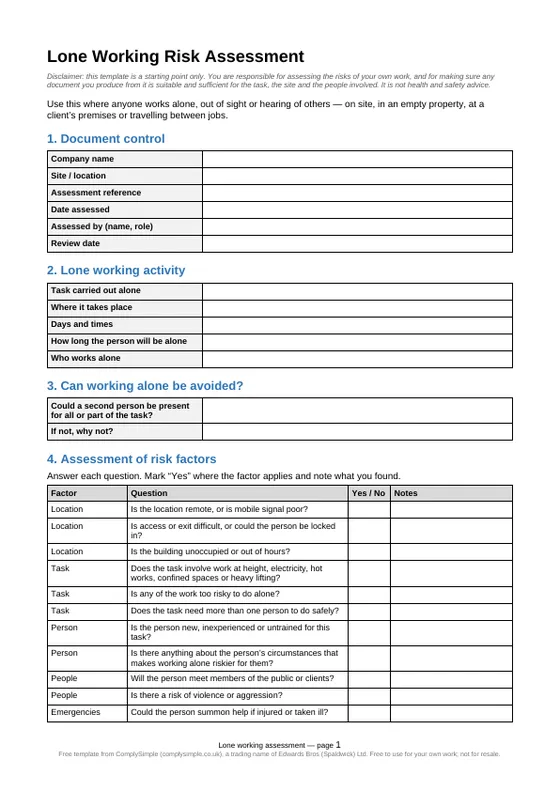
Lone working risk assessment template
For anyone working alone — risk factors, check-in arrangements and emergency plans.
 Free download
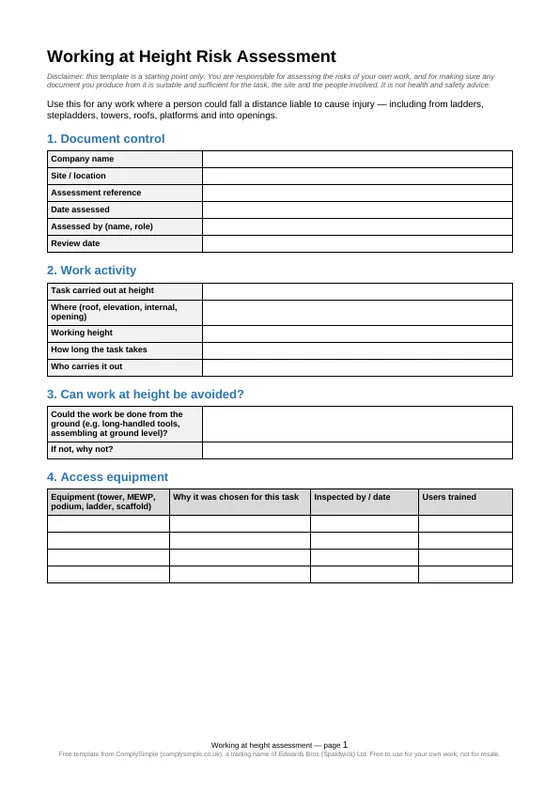
Working at height risk assessment template
Ladders, towers, roofs and openings — equipment choice, controls in the right order and a rescue plan.
 Free download
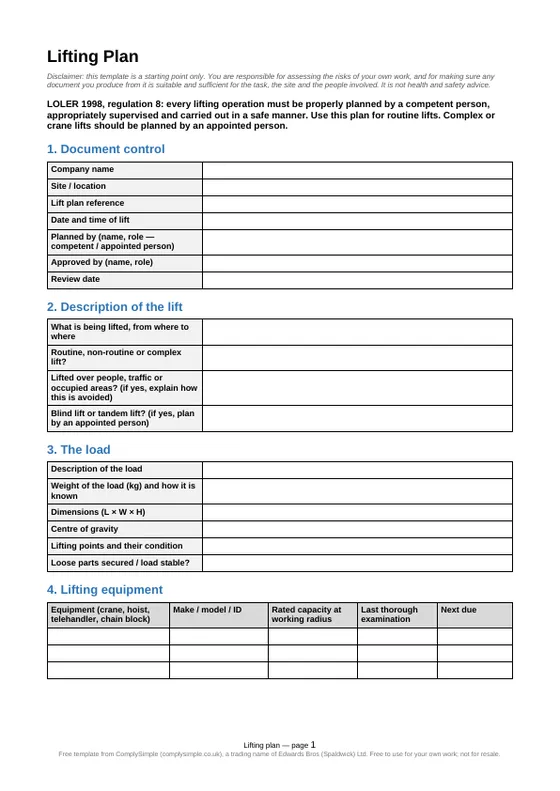
Lifting plan template
The load, equipment, capacity check, site set-up, roles and lift sequence for lifts under LOLER.
 Free download
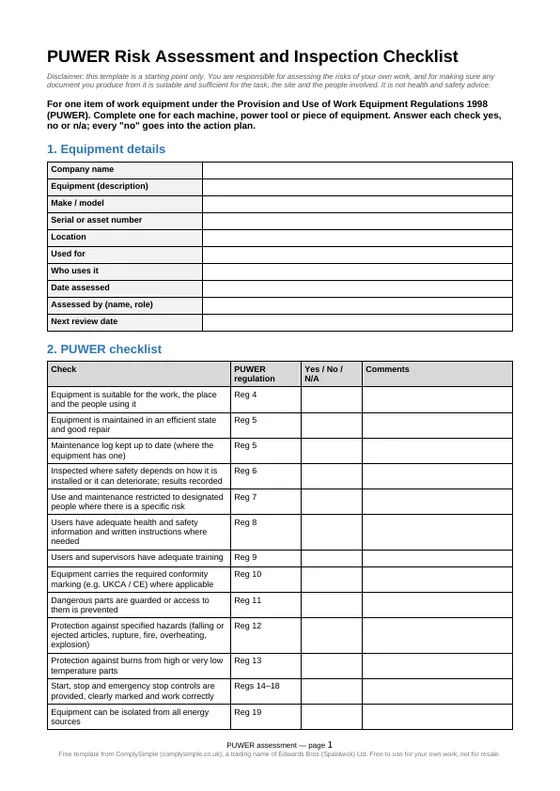
PUWER risk assessment template
Inspection checklist for work equipment, regulation by regulation, with action plan and maintenance log.
 Free download
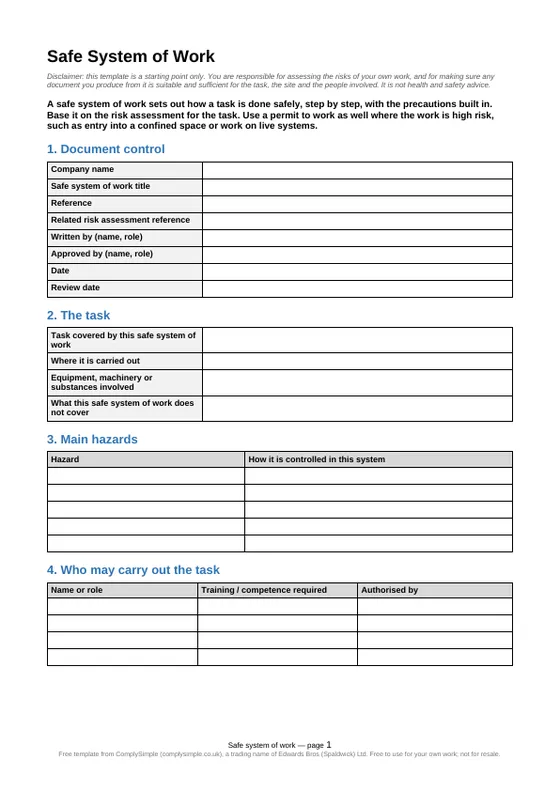
Safe system of work template
Who may do the task, checks before starting, the safe sequence, stop-work rules and review.