Disclaimer: this template is a starting point only. You are responsible for assessing the risks of your own work, and for making sure any document you produce from it is suitable and sufficient for the task, the site and the people involved. It is not health and safety advice.
What's in the template
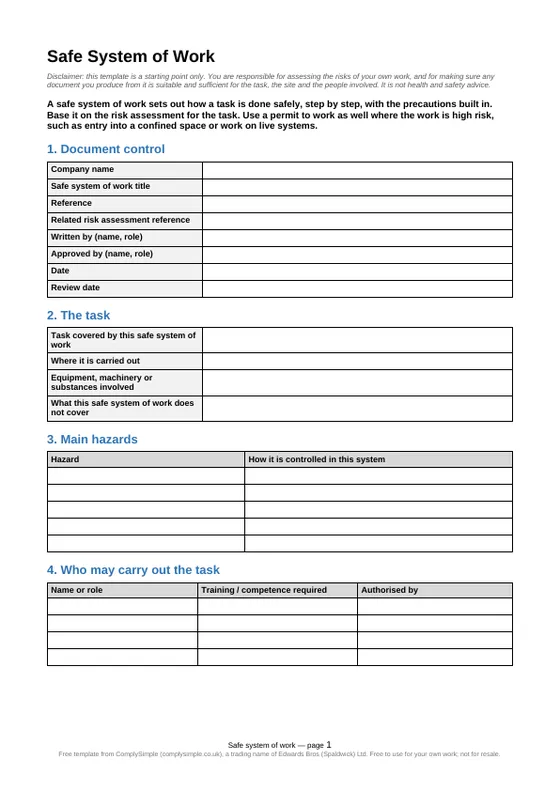
- Document control — including the risk assessment it is based on
- The task — what is covered and what is not
- Main hazards and how the system controls them
- Who may carry out the task — training and authorisation
- Before starting — area, equipment, isolation, permit, PPE, briefing
- Safe sequence of work — each step with its precautions
- Personal protective equipment
- Stop work if — the conditions that mean stop and tell a supervisor
- Emergency arrangements
- Monitoring and review
- Briefing record — sign-off sheet
What the law says
Section 2(2)(a) of the Health and Safety at Work etc. Act 1974 requires employers to provide and maintain "plant and systems of work that are, so far as is reasonably practicable, safe and without risks to health". A written safe system of work is how you show you have done that for a particular task.
Safe system of work, method statement or permit to work?
| Document | Typically used for |
|---|---|
| Safe system of work | A recurring task in your own workplace — cleaning a machine, changing a blade, unloading a delivery |
| Method statement | A particular job on a particular site, usually for a client or principal contractor |
| Permit to work | High-risk work that needs formal authorisation each time — confined spaces, hot work, work on live systems |
They overlap: a permit to work is a formal kind of safe system of work, and a method statement is a safe system of work written for one job. Base all of them on a risk assessment. If a client or principal contractor asks for a method statement for a job, our RAMS generator builds a completed RAMS in Word, method statement included, from your answers.
Example: cleaning a dough mixer in a bakery
| Step | What to do | Precautions at this step |
|---|---|---|
| 1 | Switch off and isolate the mixer at the isolator | Lock off and keep the key; tag the isolator |
| 2 | Try the start button to prove it is isolated | Stand clear of the bowl while testing |
| 3 | Remove the bowl guard and scrape out residue | Use the scraper provided; no hands inside the bowl near the hook |
| 4 | Wash down with the approved cleaner | Gloves and eye protection; follow the safety data sheet |
| 5 | Refit the guard and check the interlock | Mixer must not run with the guard open |
| 6 | Remove the lock and return to service | Only the person who fitted the lock removes it |
For machinery, also check the equipment against PUWER with the PUWER checklist.
Working on someone else's site? The principal contractor will usually want a RAMS. Build a completed RAMS in Word, £19 including VAT.
Five or more employees? The law also requires a written health and safety policy. Ours is ready to edit, with the statement already written: health and safety policy, £9 including VAT.
More templates
 Free download
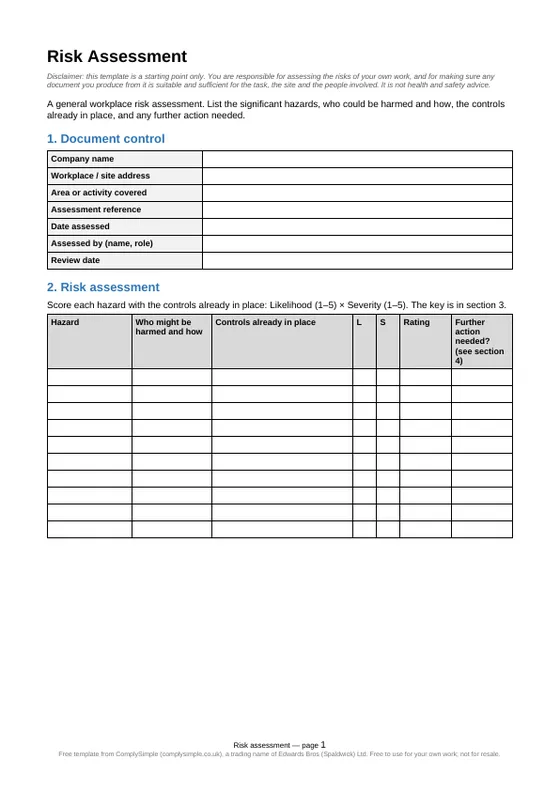
Risk assessment template
General workplace risk assessment for any small business — hazards, controls, risk rating and action plan.
 Free download
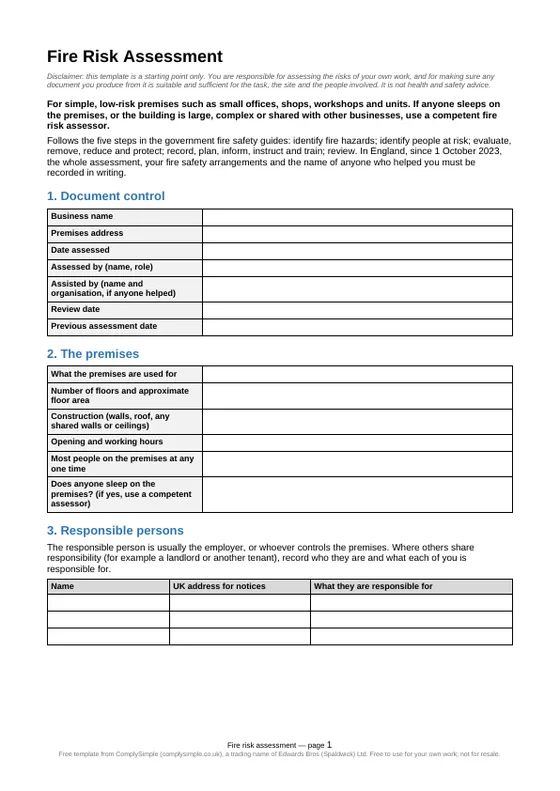
Fire risk assessment template
The five government steps, fire safety arrangements and the written record required since October 2023.
 £9 Word template
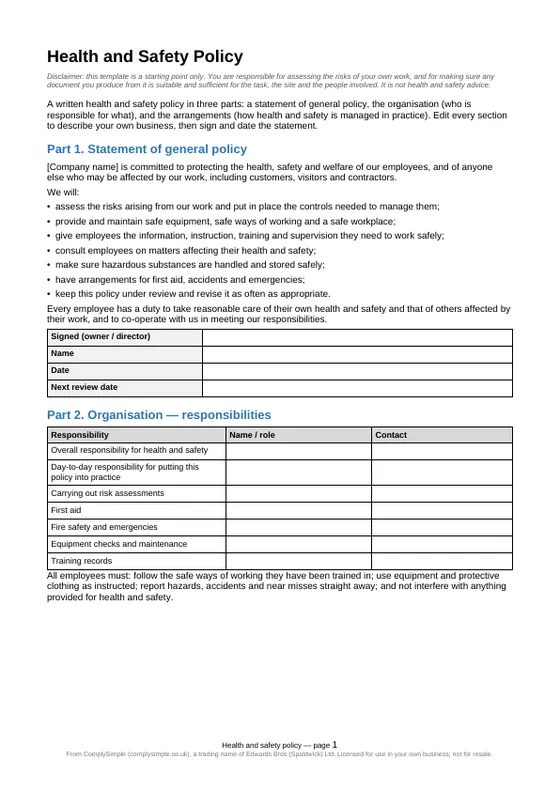
Health and safety policy template
The written policy employers with five or more staff must have — statement, organisation and arrangements.
 Free download
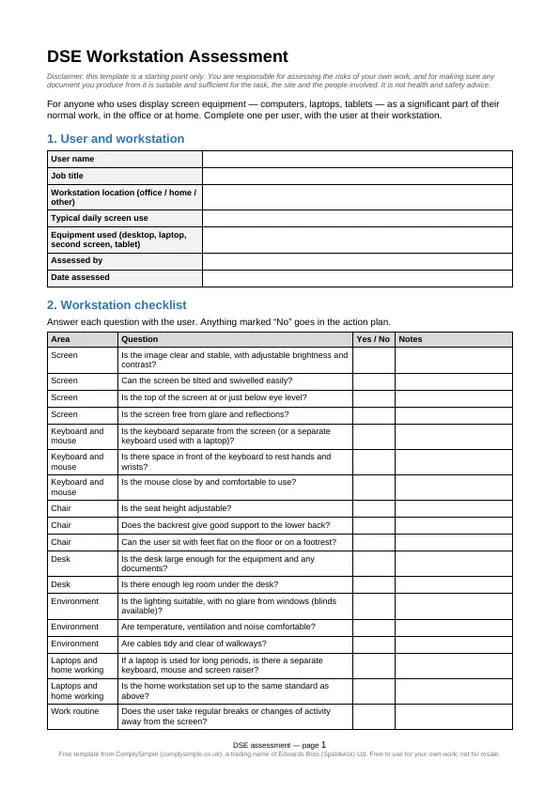
DSE assessment template
Workstation checklist for computer and laptop users, in the office or at home.
 Free download
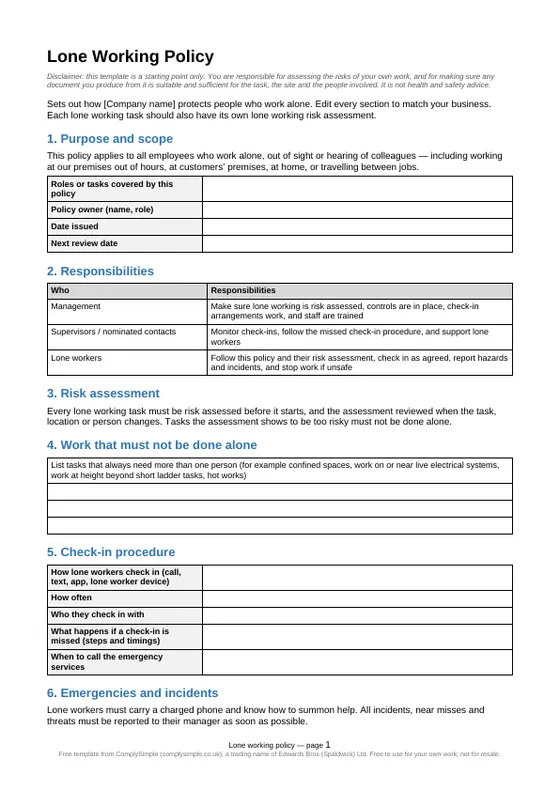
Lone working policy template
The rules for everyone who works alone — responsibilities, check-ins and emergencies.
 Free download
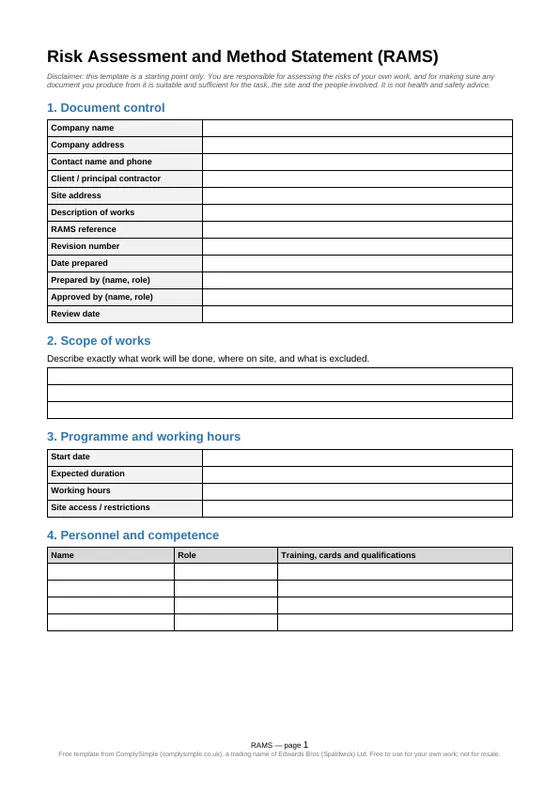
RAMS template
Risk assessment and method statement combined — what most principal contractors ask for.
 £9 Word template
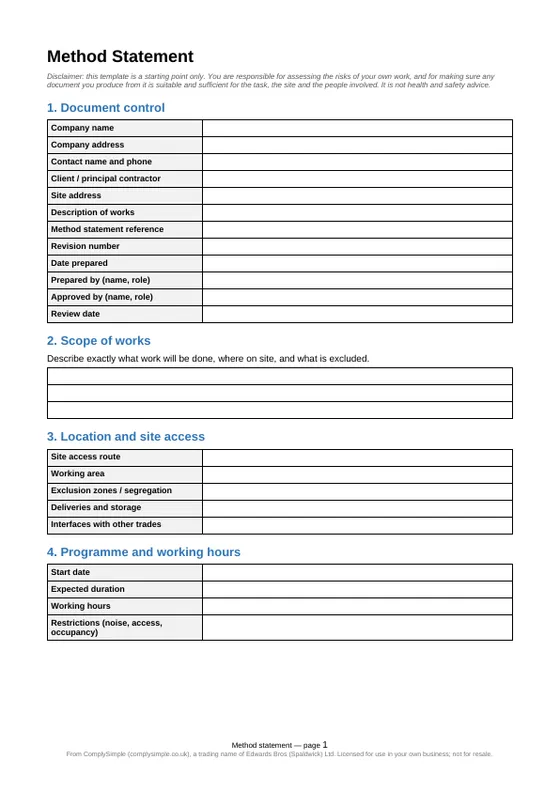
Method statement template
Step-by-step sequence of works, roles, plant, PPE and emergency arrangements.
 Free download
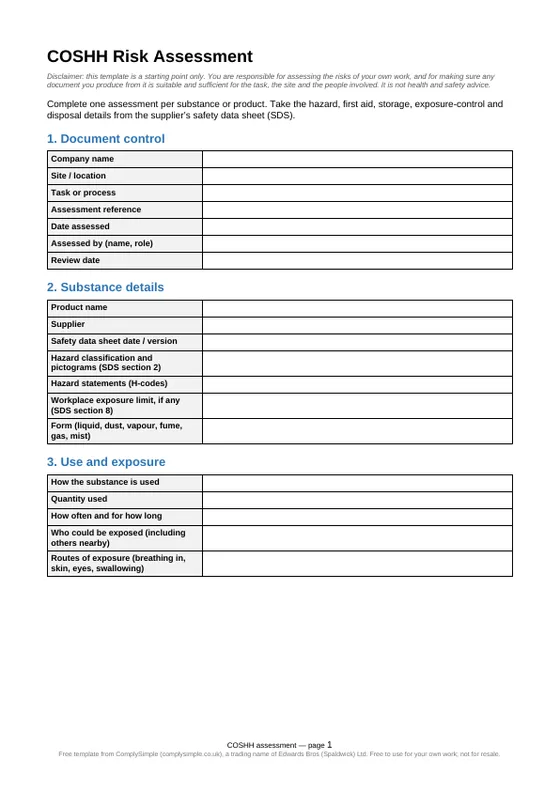
COSHH risk assessment template
For hazardous substances — safety data sheet details, controls, storage, spills and first aid.
 Free download
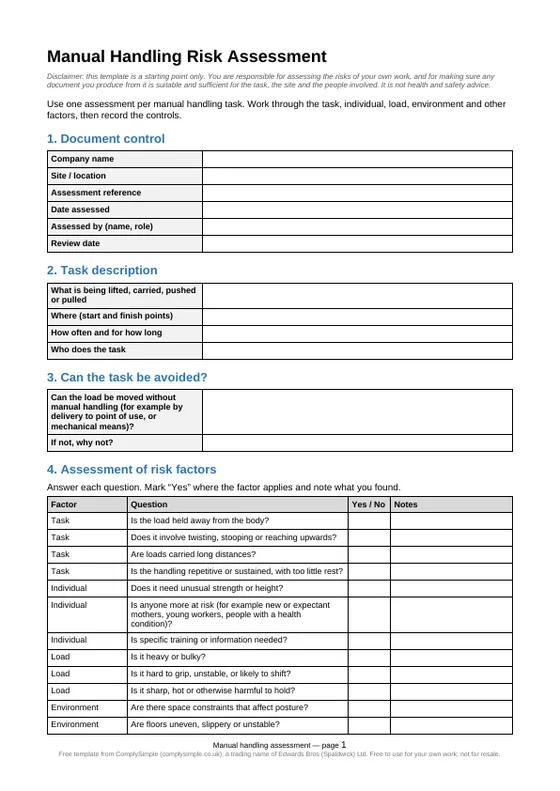
Manual handling risk assessment template
Lifting, carrying, pushing and pulling — task, load and environment factors, with controls.
 Free download
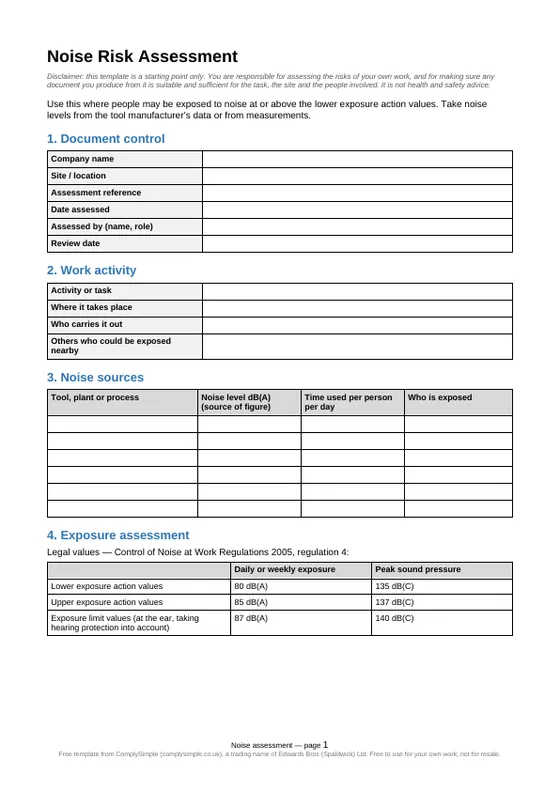
Noise risk assessment template
Noise sources and exposure against the legal action values, controls and hearing protection.
 Free download
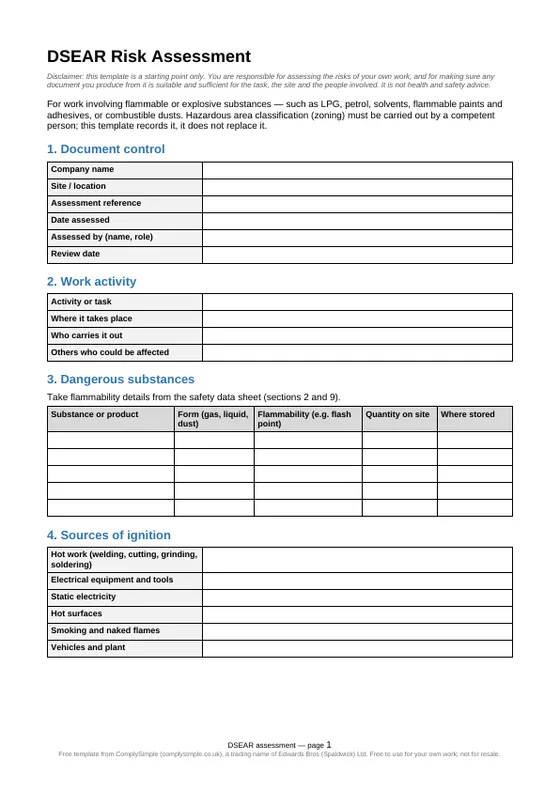
DSEAR risk assessment template
Flammable substances and ignition sources — controls, storage and emergency arrangements.
 Free download
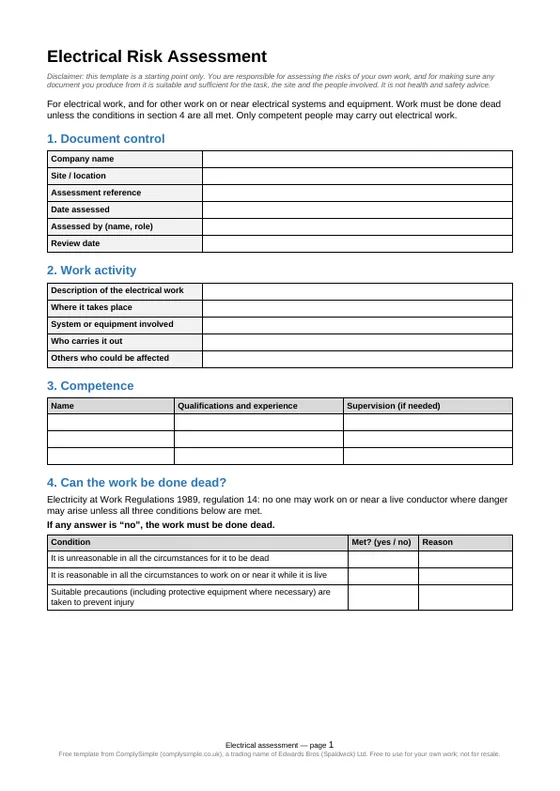
Electrical risk assessment template
Dead-working check, safe isolation steps, competence and controls for work on or near electricity.
 Free download
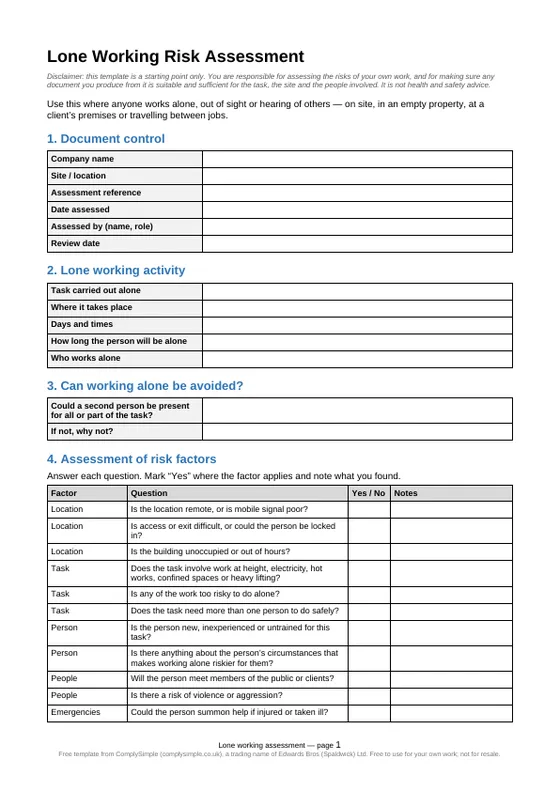
Lone working risk assessment template
For anyone working alone — risk factors, check-in arrangements and emergency plans.
 Free download
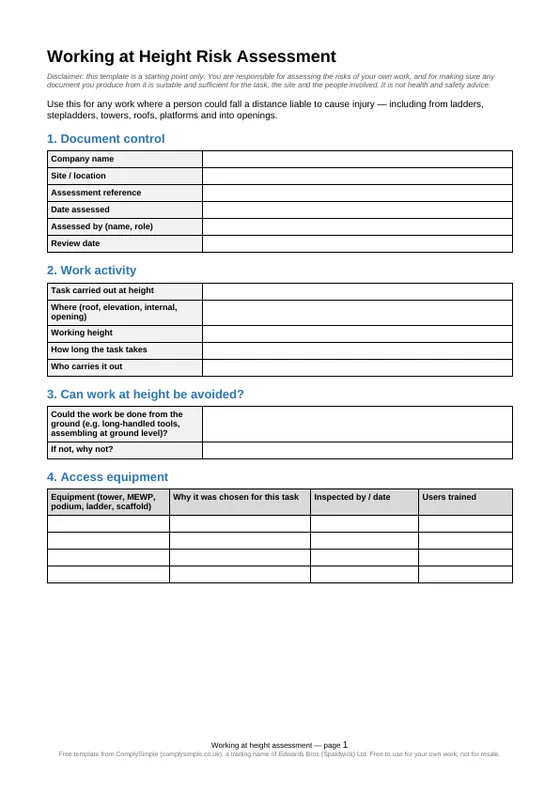
Working at height risk assessment template
Ladders, towers, roofs and openings — equipment choice, controls in the right order and a rescue plan.
 Free download
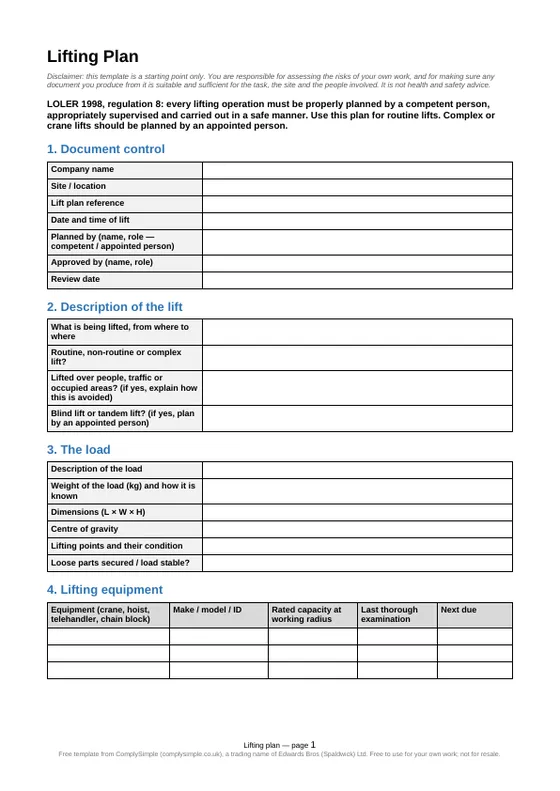
Lifting plan template
The load, equipment, capacity check, site set-up, roles and lift sequence for lifts under LOLER.
 Free download
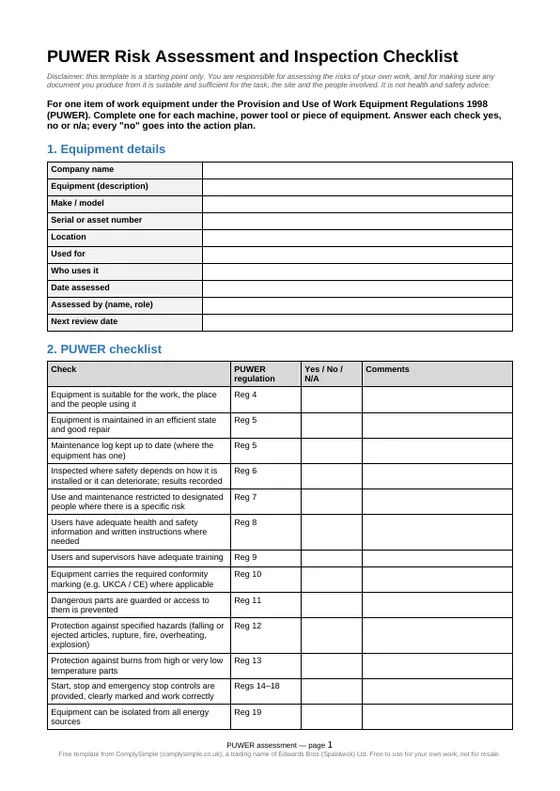
PUWER risk assessment template
Inspection checklist for work equipment, regulation by regulation, with action plan and maintenance log.