Disclaimer: this template is a starting point only. You are responsible for assessing the risks of your own work, and for making sure any document you produce from it is suitable and sufficient for the task, the site and the people involved. It is not health and safety advice.
What's in the template
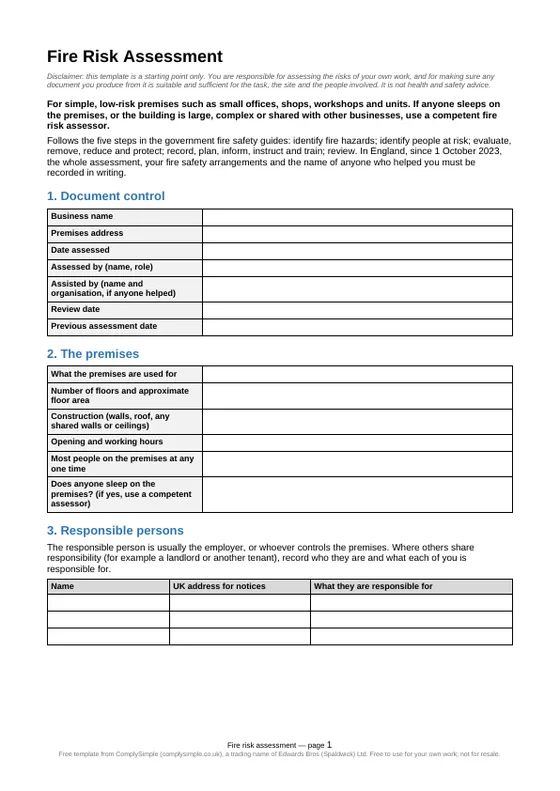
- Document control — including who helped you, if anyone
- The premises — use, size, construction, hours and occupancy
- Responsible persons — and who else shares responsibility
- Step 1: fire hazards — ignition, fuel, oxygen and arson risk
- Step 2: people at risk
- Step 3: evaluate, remove, reduce and protect — alarms, escape routes, fire doors, lighting, signs, extinguishers — with a risk rating
- Fire safety arrangements — alarm, marshals, evacuation, assembly point, checks and maintenance
- Action plan
- Step 4: information, instruction and training
- Step 5: review log
- Briefing record — sign-off sheet
Who has to do a fire risk assessment?
If you run a business or control non-domestic premises, you are the "responsible person" and you must carry out a fire risk assessment and keep it up to date. In England and Wales the law is the Regulatory Reform (Fire Safety) Order 2005. Scotland and Northern Ireland have their own fire safety laws with similar duties.
What changed in October 2023
Section 156 of the Building Safety Act 2022 tightened the rules in England from 1 October 2023. For all non-domestic premises, whatever the size of the business:
- the whole fire risk assessment must be recorded in writing, not just the significant findings;
- your fire safety arrangements — how fire safety is managed — must be recorded;
- if someone helps you with the assessment, you should record their name and organisation;
- where responsibility is shared (for example with a landlord), responsible persons must identify and co-operate with each other.
Before this, businesses with fewer than five employees didn't always have to write it down. That exemption has gone. The government publishes a guide to the section 156 changes.
The five steps
- Identify fire hazards — what could start a fire, and what would burn.
- Identify people at risk — especially anyone who would find it hard to get out.
- Evaluate, remove, reduce and protect — remove or reduce the hazards, then make sure people can be warned and escape safely.
- Record, plan, inform, instruct and train — write it down, make an emergency plan and tell people what to do.
- Review — regularly, and whenever something changes.
Can I do it myself?
For a small, simple premises, yes — many owners do, using the government's guides. If people sleep on the premises, or the building is large, complex, or shared with other occupiers, use a competent fire risk assessor. If you're unsure, your local fire and rescue service can advise.
Need a general risk assessment as well? Use our free risk assessment template.
Five or more employees? The law also requires a written health and safety policy. Ours is ready to edit, with the statement already written: health and safety policy, £9 including VAT.
Working on someone else's site? The principal contractor will usually want a RAMS. Build a completed RAMS in Word, £19 including VAT.
More templates
 Free download
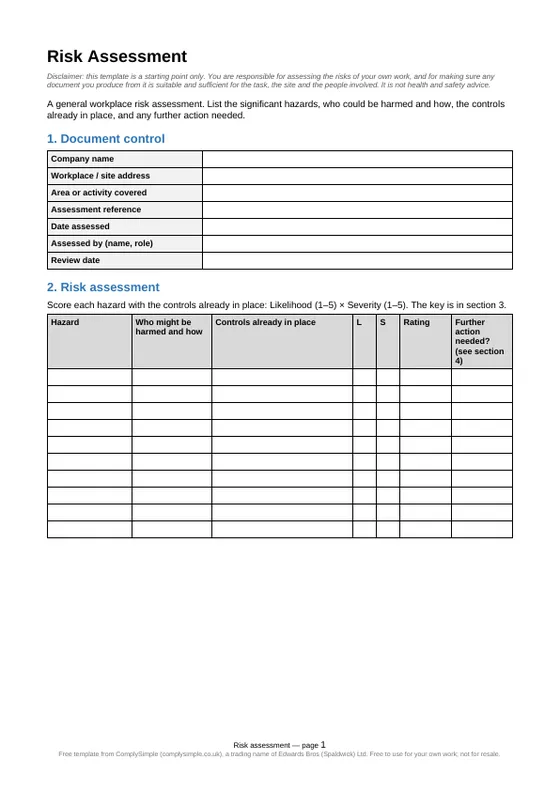
Risk assessment template
General workplace risk assessment for any small business — hazards, controls, risk rating and action plan.
 £9 Word template
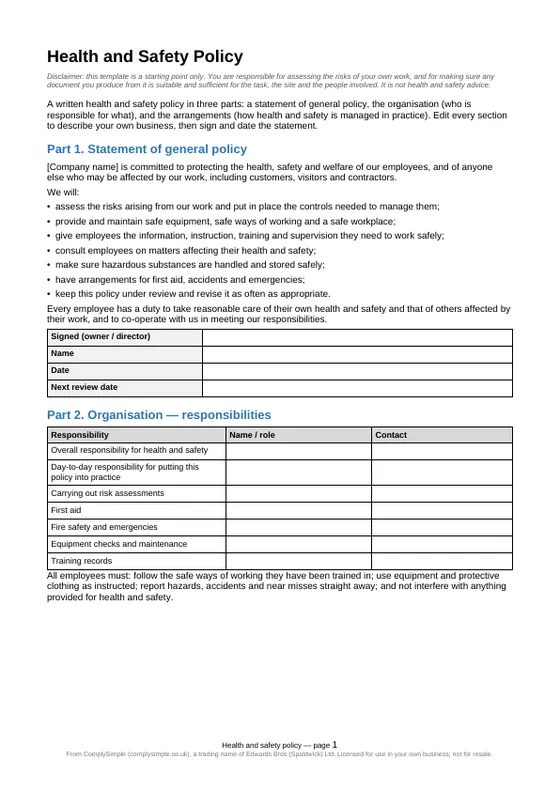
Health and safety policy template
The written policy employers with five or more staff must have — statement, organisation and arrangements.
 Free download
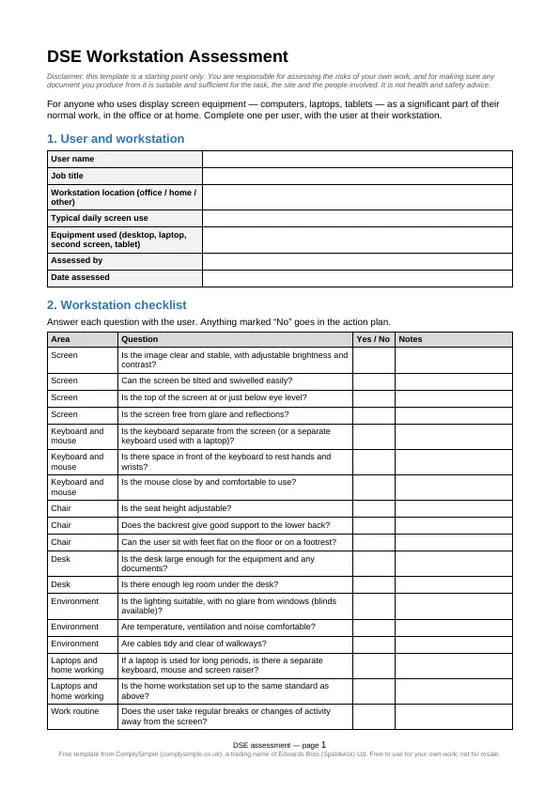
DSE assessment template
Workstation checklist for computer and laptop users, in the office or at home.
 Free download
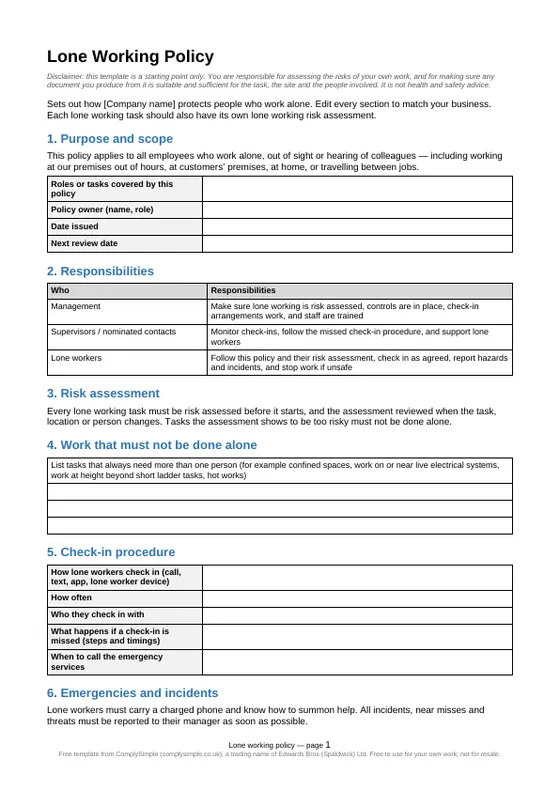
Lone working policy template
The rules for everyone who works alone — responsibilities, check-ins and emergencies.
 Free download
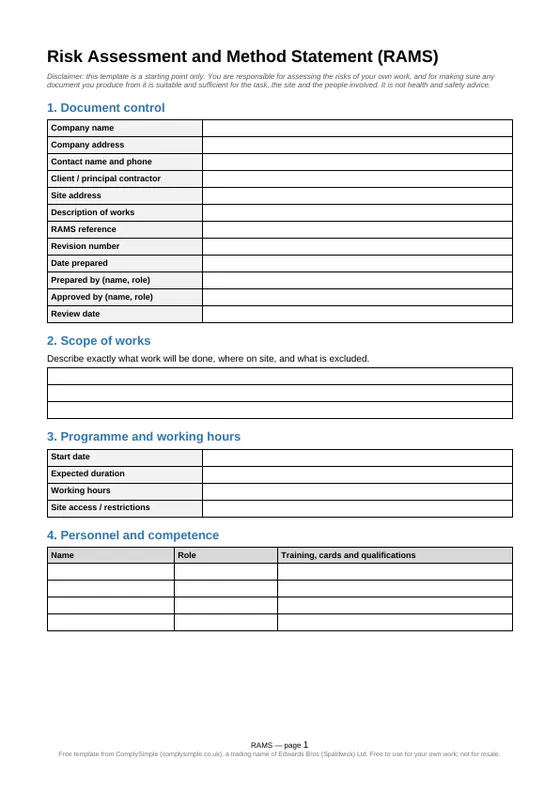
RAMS template
Risk assessment and method statement combined — what most principal contractors ask for.
 £9 Word template
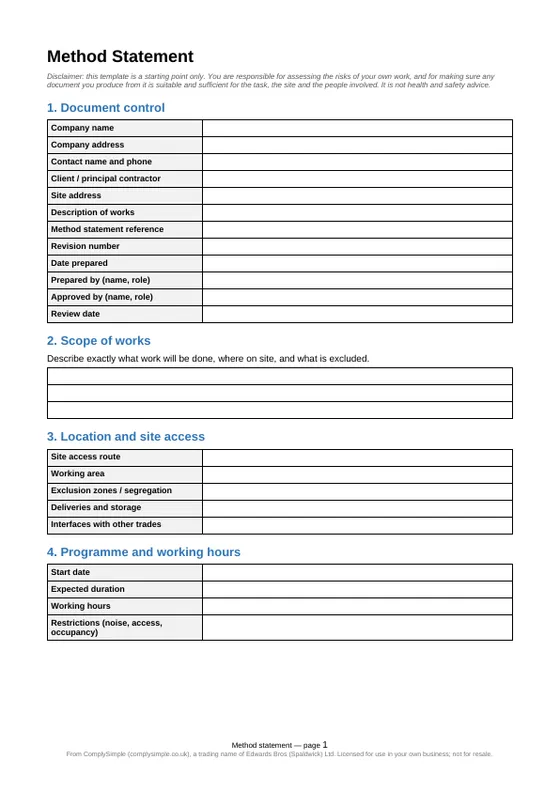
Method statement template
Step-by-step sequence of works, roles, plant, PPE and emergency arrangements.
 Free download
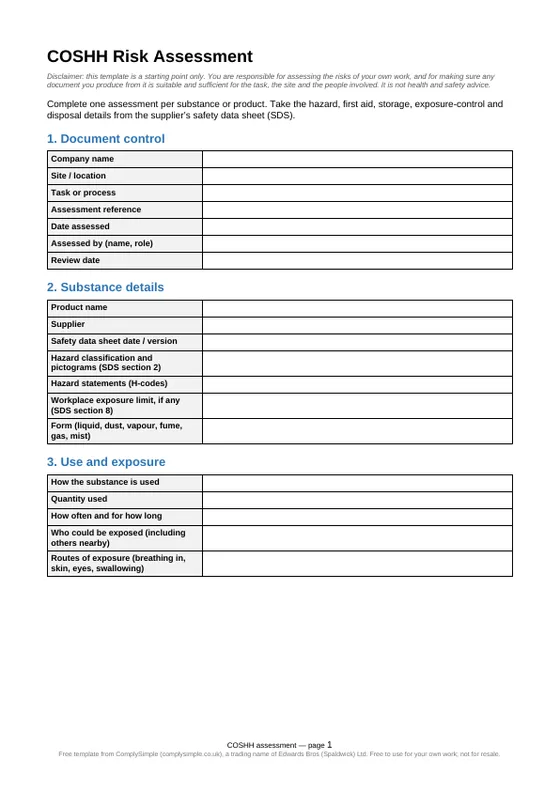
COSHH risk assessment template
For hazardous substances — safety data sheet details, controls, storage, spills and first aid.
 Free download
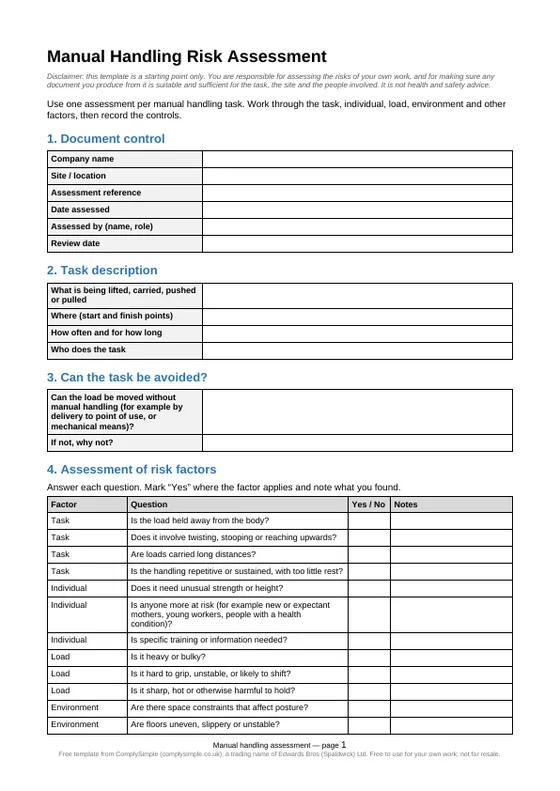
Manual handling risk assessment template
Lifting, carrying, pushing and pulling — task, load and environment factors, with controls.
 Free download
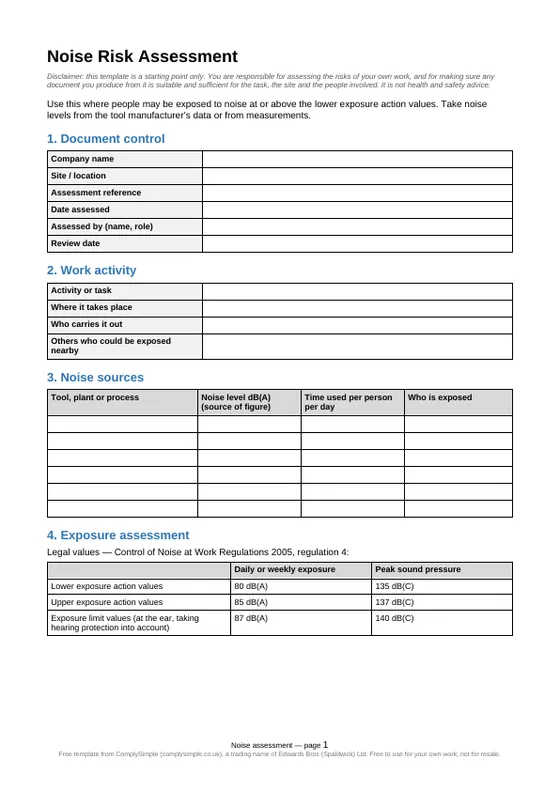
Noise risk assessment template
Noise sources and exposure against the legal action values, controls and hearing protection.
 Free download
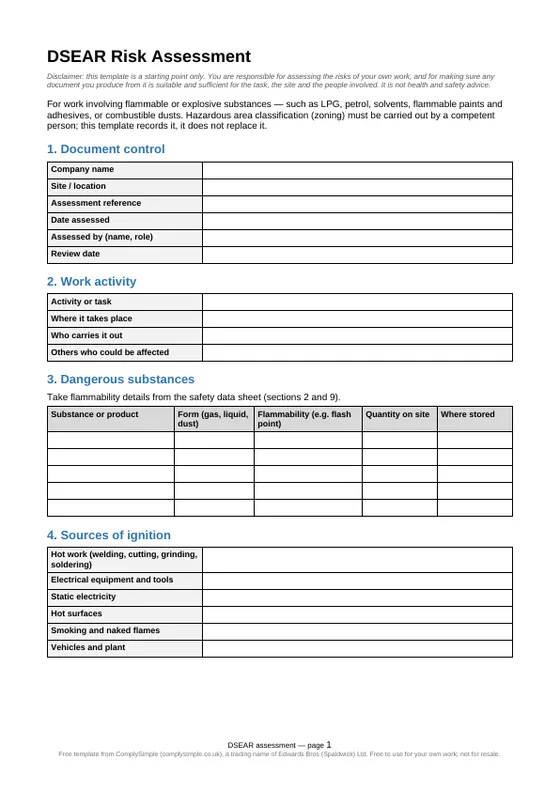
DSEAR risk assessment template
Flammable substances and ignition sources — controls, storage and emergency arrangements.
 Free download
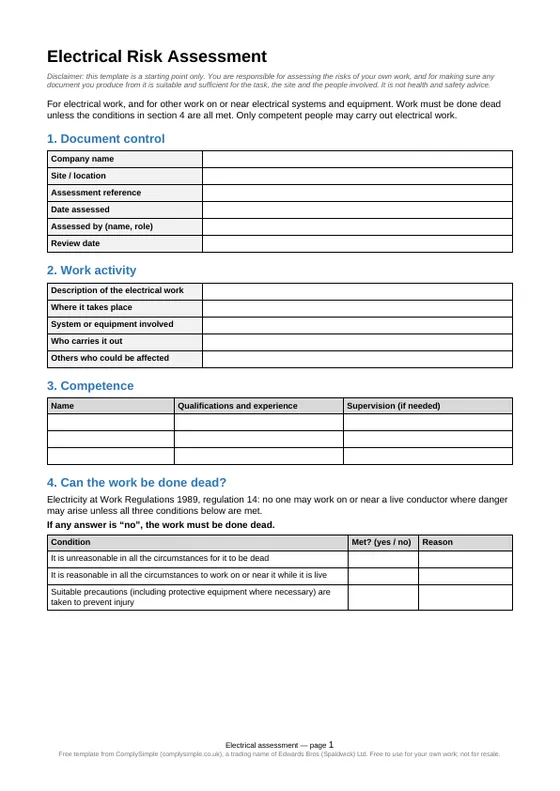
Electrical risk assessment template
Dead-working check, safe isolation steps, competence and controls for work on or near electricity.
 Free download
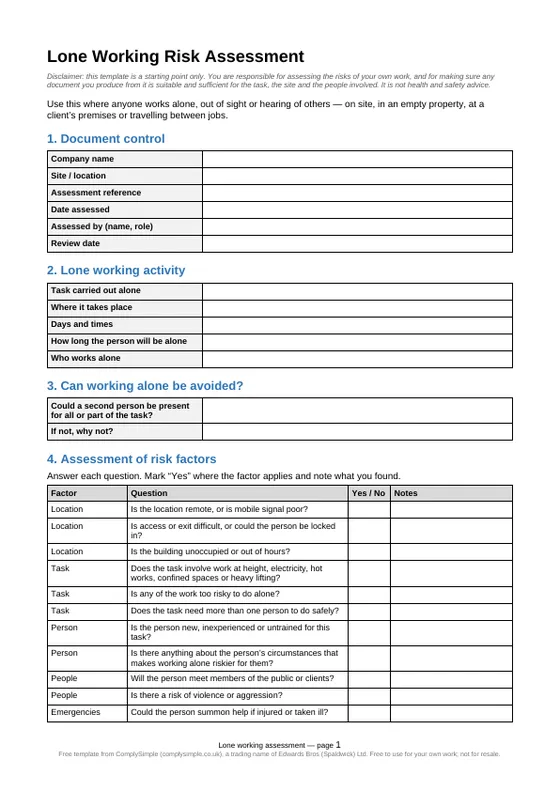
Lone working risk assessment template
For anyone working alone — risk factors, check-in arrangements and emergency plans.
 Free download
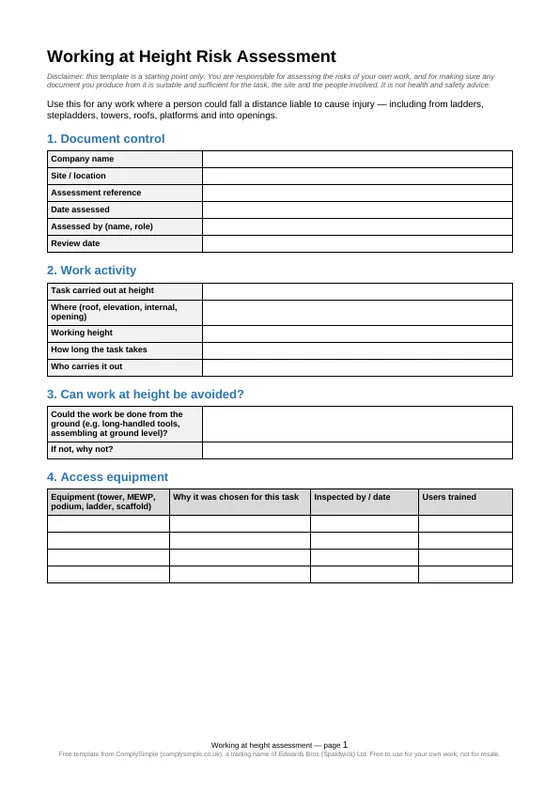
Working at height risk assessment template
Ladders, towers, roofs and openings — equipment choice, controls in the right order and a rescue plan.
 Free download
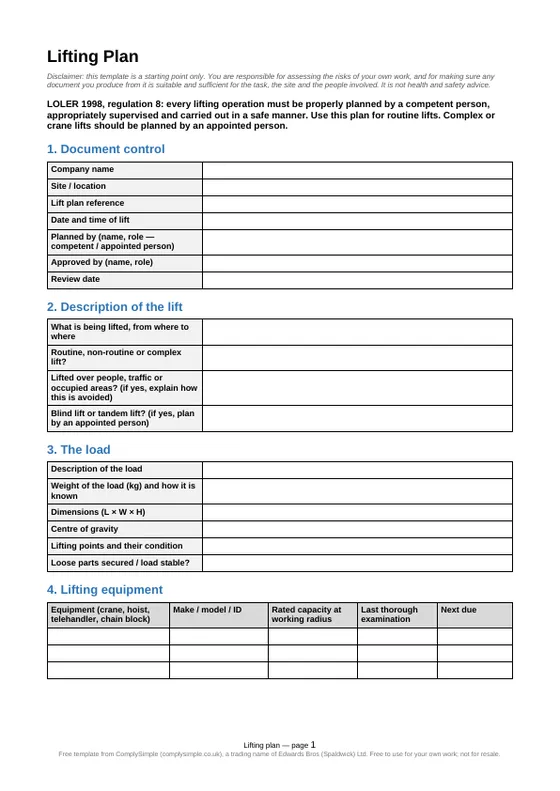
Lifting plan template
The load, equipment, capacity check, site set-up, roles and lift sequence for lifts under LOLER.
 Free download
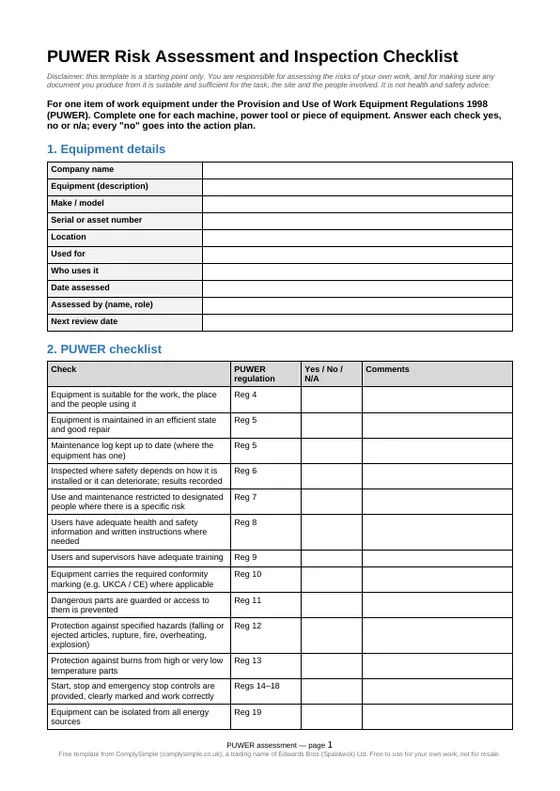
PUWER risk assessment template
Inspection checklist for work equipment, regulation by regulation, with action plan and maintenance log.
 Free download
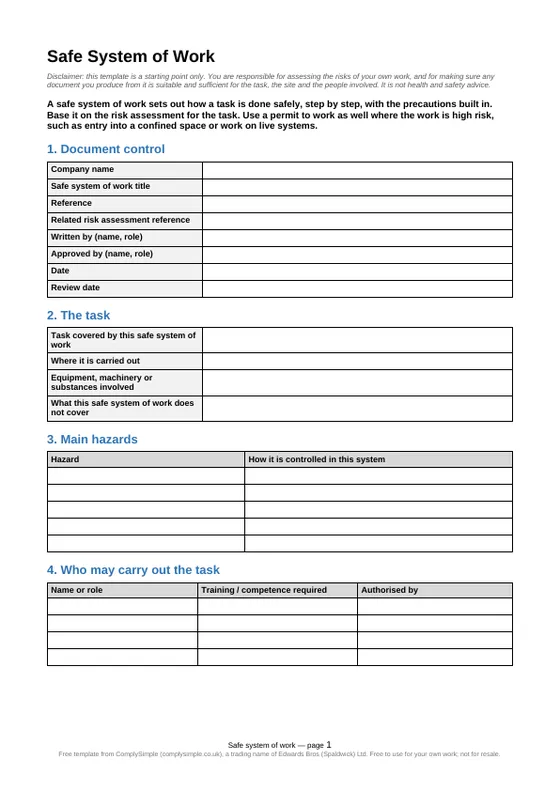
Safe system of work template
Who may do the task, checks before starting, the safe sequence, stop-work rules and review.