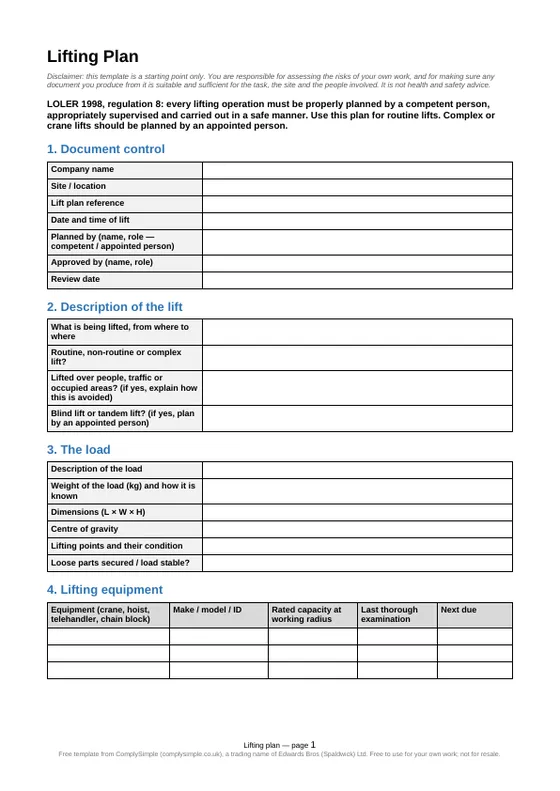
Disclaimer: this template is a starting point only. You are responsible for assessing the risks of your own work, and for making sure any document you produce from it is suitable and sufficient for the task, the site and the people involved. It is not health and safety advice.
What's in the template
- Document control
- Description of the lift — including whether it is routine, non-routine or complex
- The load — weight, dimensions, centre of gravity, lifting points
- Lifting equipment — rated capacity and thorough examination dates
- Lifting accessories — working load limits and 6-monthly examinations
- Capacity check — total weight against capacity at the working radius
- Site and set-up — ground, power lines, services, exclusion zone, wind limit
- People and roles — planner, supervisor, operator, slinger / signaller
- Communication — signals and the stop signal
- Sequence of the lift
- Emergency arrangements
- Briefing record — sign-off sheet
What the law says
Under regulation 8 of the Lifting Operations and Lifting Equipment Regulations 1998 (LOLER), every lifting operation must be:
- properly planned by a competent person;
- appropriately supervised; and
- carried out in a safe manner.
For routine work such as fork-lift truck operations, HSE says a formal plan isn't needed for every individual lift — but the planning must still be done, and extra care is needed whenever the way the work is done changes. The person who plans crane lifts is often called the "appointed person".
Thorough examination: how often
| Equipment | Minimum interval |
|---|---|
| Lifting equipment | Every 12 months |
| Equipment used to lift people | Every 6 months |
| Lifting accessories (slings, shackles, chains) | Every 6 months |
These are the minimums where there is no written examination scheme. A competent person can draw up a scheme with different intervals. Record the dates in sections 4 and 5 of the plan.
Worked example: the capacity check
A contractor lifts a steel beam with a mobile crane. The beam weighs 800 kg, and the slings and shackles weigh 40 kg, so the total weight lifted is 840 kg. The crane's load chart gives a rated capacity of 1,200 kg at the 12 m radius needed for this lift.
Utilisation = 840 ÷ 1,200 × 100 = 70%. That is within capacity. If the radius increased and the capacity at that radius fell to 800 kg, utilisation would be 105% — the lift could not go ahead as planned.
When you need more than this template
Use an appointed person, and a fuller plan, for complex lifts: tandem lifts, blind lifts, lifting near overhead power lines, lifting over occupied areas, or any lift close to the equipment's capacity. For lifts that are part of a wider job, put the lift plan with your RAMS. If a client asks for a RAMS covering the job the lift belongs to, our RAMS generator builds a completed RAMS in Word from your answers.
Working on someone else's site? The principal contractor will usually want a RAMS. Build a completed RAMS in Word, £19 including VAT.
Five or more employees? The law also requires a written health and safety policy. Ours is ready to edit, with the statement already written: health and safety policy, £9 including VAT.
More templates
 Free download
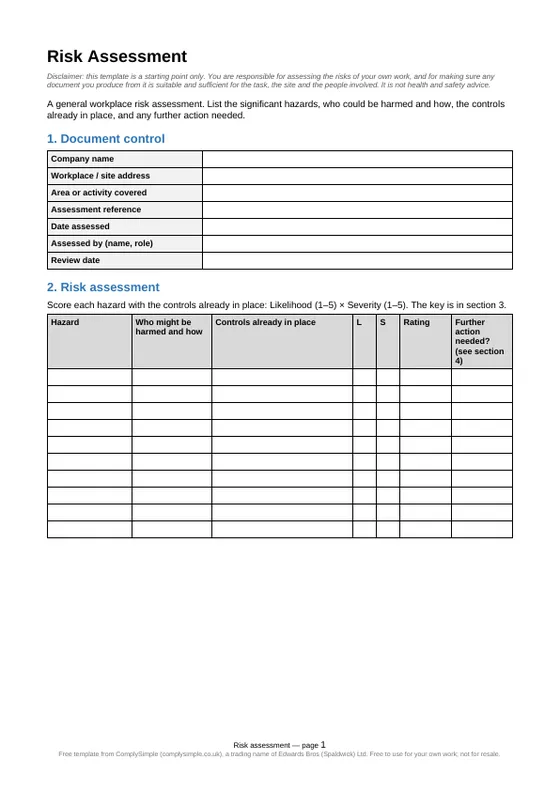
Risk assessment template
General workplace risk assessment for any small business — hazards, controls, risk rating and action plan.
 Free download
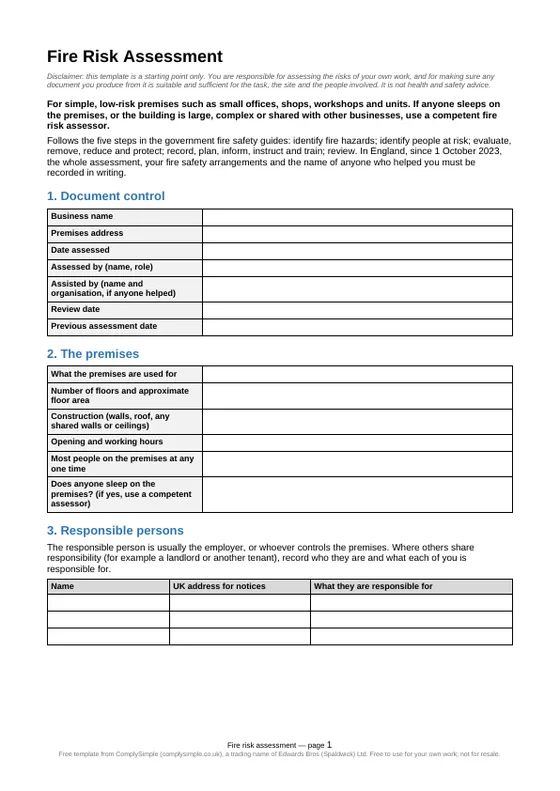
Fire risk assessment template
The five government steps, fire safety arrangements and the written record required since October 2023.
 £9 Word template
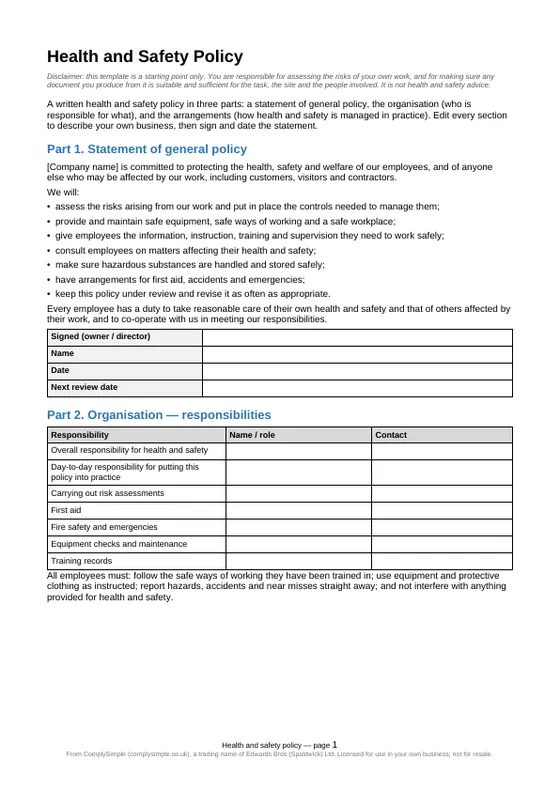
Health and safety policy template
The written policy employers with five or more staff must have — statement, organisation and arrangements.
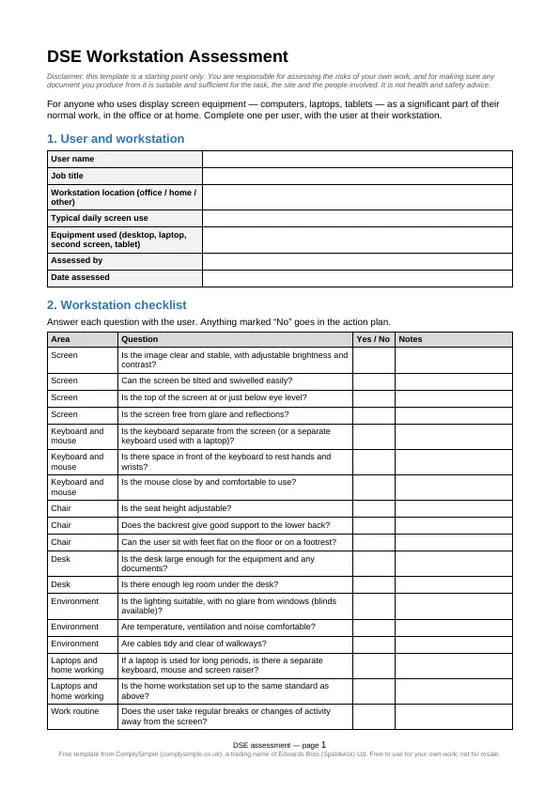 Free download
DSE assessment template
Workstation checklist for computer and laptop users, in the office or at home.
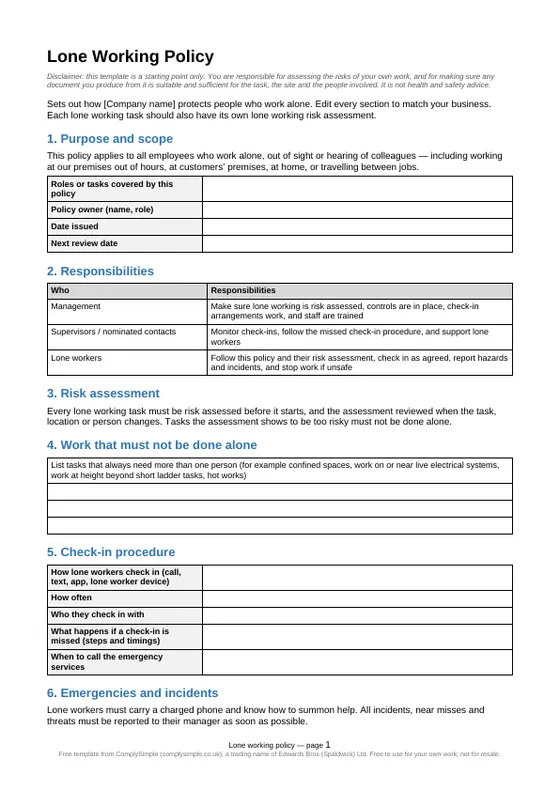 Free download
Lone working policy template
The rules for everyone who works alone — responsibilities, check-ins and emergencies.
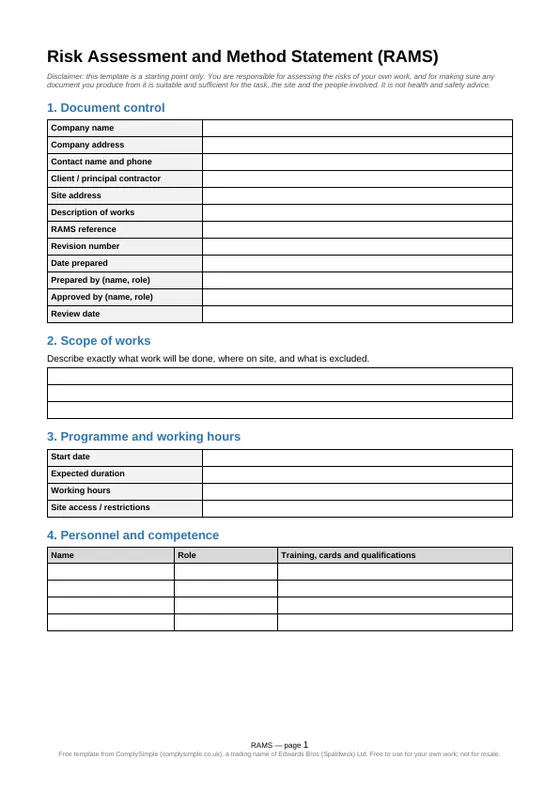 Free download
RAMS template
Risk assessment and method statement combined — what most principal contractors ask for.
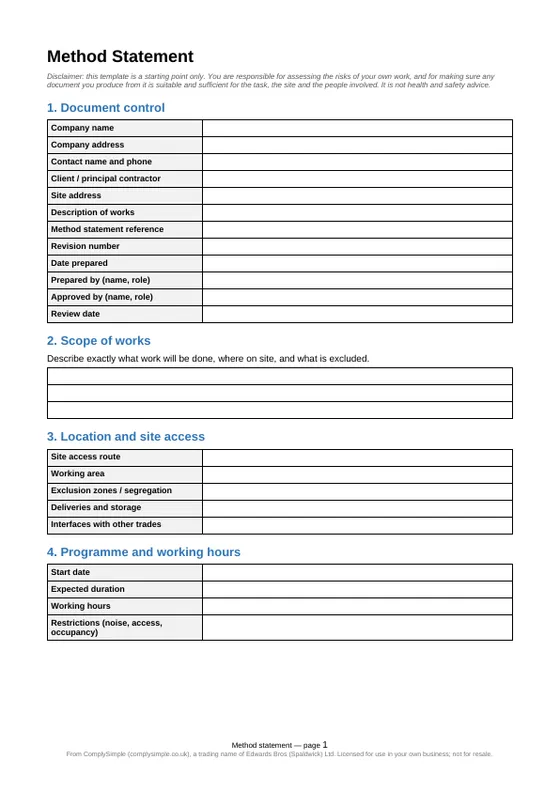 £9 Word template
Method statement template
Step-by-step sequence of works, roles, plant, PPE and emergency arrangements.
 Free download
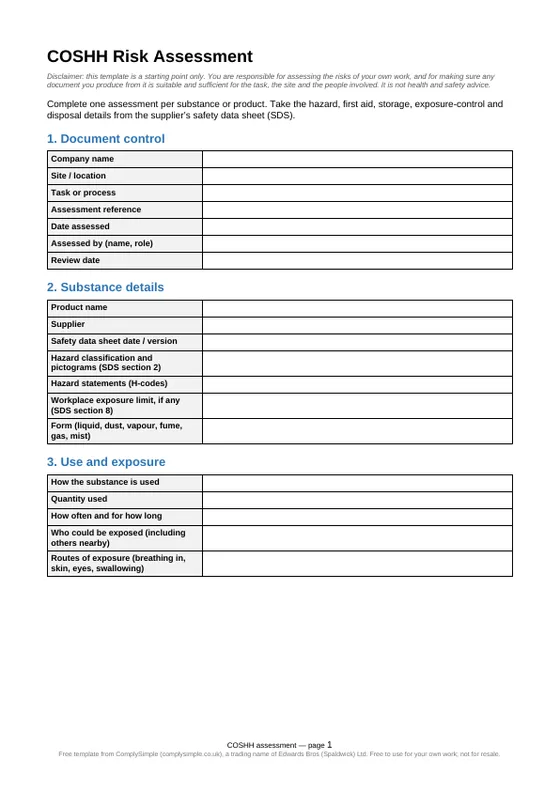
COSHH risk assessment template
For hazardous substances — safety data sheet details, controls, storage, spills and first aid.
 Free download
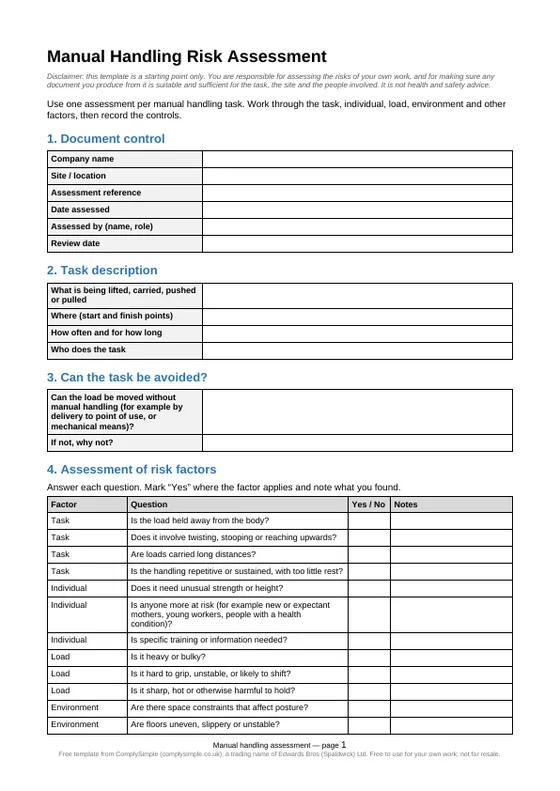
Manual handling risk assessment template
Lifting, carrying, pushing and pulling — task, load and environment factors, with controls.
 Free download
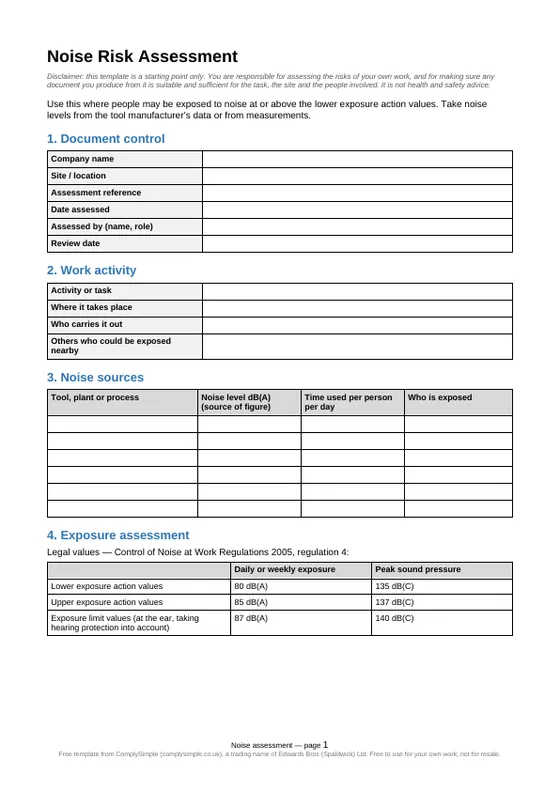
Noise risk assessment template
Noise sources and exposure against the legal action values, controls and hearing protection.
 Free download
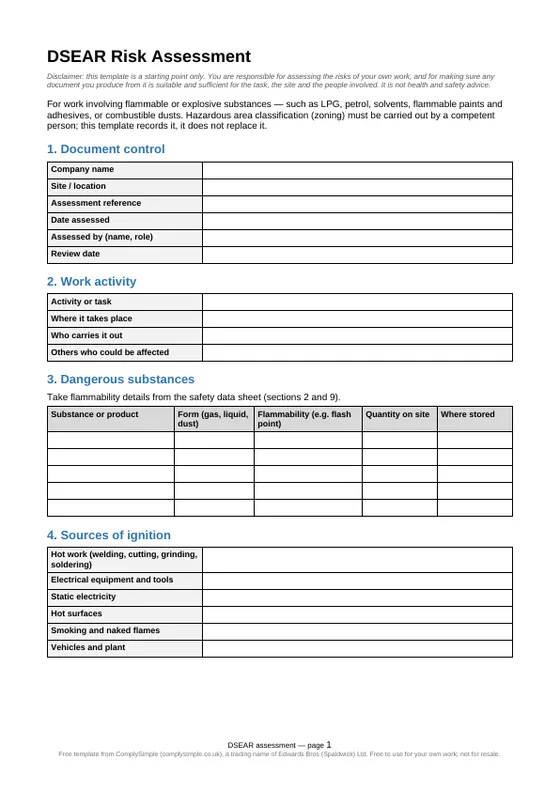
DSEAR risk assessment template
Flammable substances and ignition sources — controls, storage and emergency arrangements.
 Free download
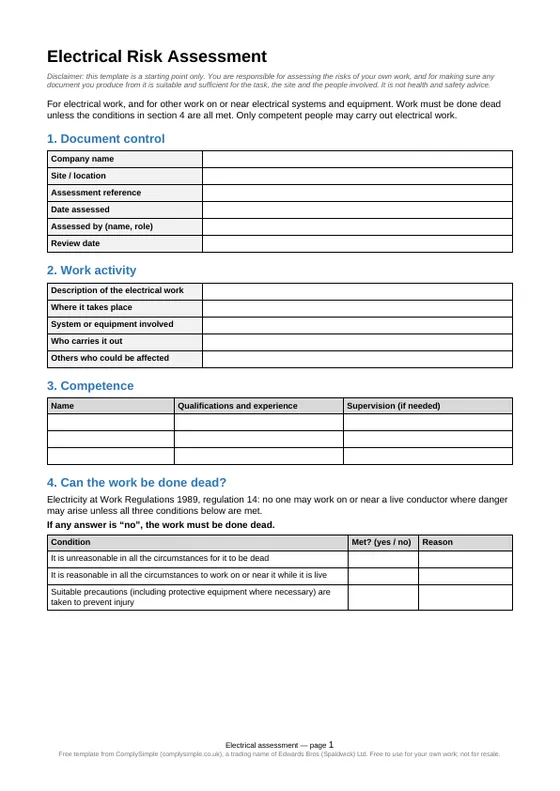
Electrical risk assessment template
Dead-working check, safe isolation steps, competence and controls for work on or near electricity.
 Free download
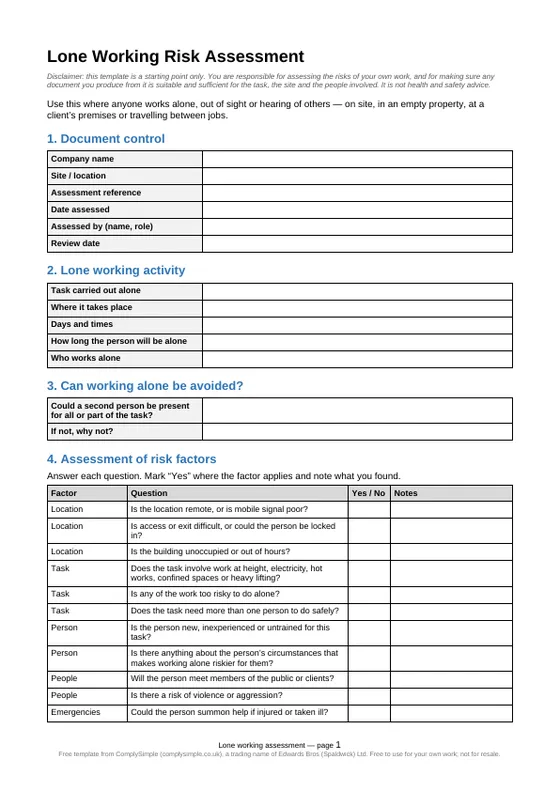
Lone working risk assessment template
For anyone working alone — risk factors, check-in arrangements and emergency plans.
 Free download
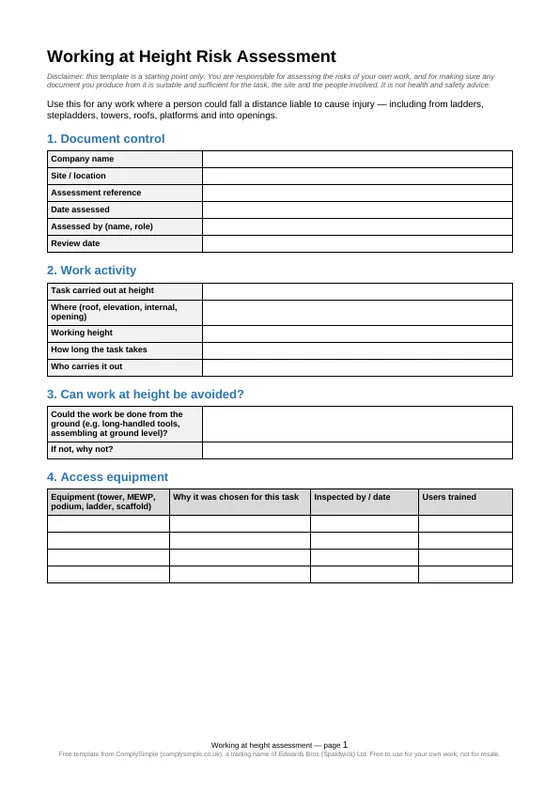
Working at height risk assessment template
Ladders, towers, roofs and openings — equipment choice, controls in the right order and a rescue plan.
 Free download
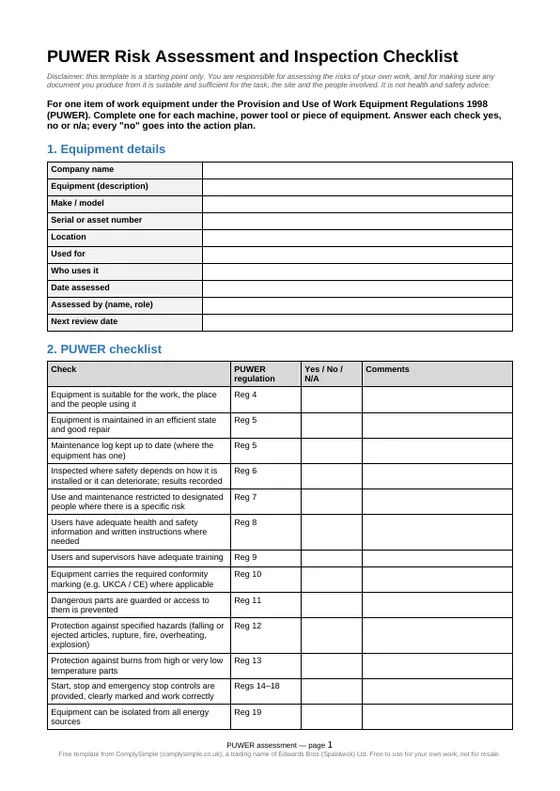
PUWER risk assessment template
Inspection checklist for work equipment, regulation by regulation, with action plan and maintenance log.
 Free download
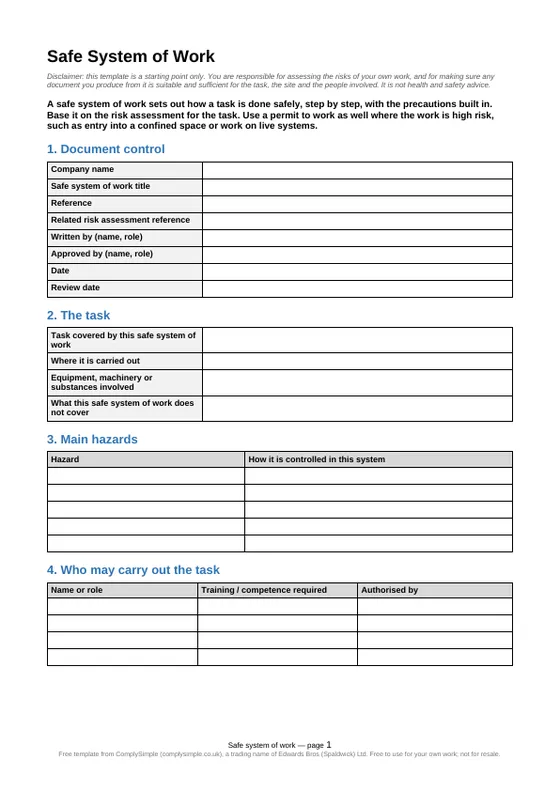
Safe system of work template
Who may do the task, checks before starting, the safe sequence, stop-work rules and review.